





 coupon
  Gift card


Sciatica and Insomnia: How to Calm Nerve Pain Before Bed
When Nerve Pain Takes Over the Night
You lie down expecting rest—but instead, the discomfort sharpens.
A burning pain moves through your lower back into your left leg or affected leg, sometimes switching sides. You adjust your sleep position, bend one knee, stretch the other leg straight, and try again.
Still, the pain lingers.
This is the reality of sciatica and insomnia, where sciatic nerve pain doesn’t just hurt—it actively disrupt sleep.
If you’re trying to sleep with sciatica, you’re not just managing discomfort. You’re navigating a system where pain caused by irritated spinal nerves interferes with recovery. This article explores sciatica pain relief at night relief at night techniques.
Why Sciatica Pain Gets Worse at Night
Less movement, more stiffness
During the day, even small movements help maintain blood flow and reduce pressure around the sciatic nerve.
At night, stillness takes over.
Without movement:
- Muscles tighten
- Muscle spasms may increase
- Pressure builds around sensitive areas
This is one reason sciatica pain worse at night feels so noticeable.
Increased awareness of pain
When distractions disappear, sciatic nerve pain becomes the main signal.
What felt manageable earlier can feel intense once your attention shifts inward.
Compression from poor sleep position
Certain positions increase strain on the nerve root.
If your spine isn’t supported or your hips rotate unevenly:
- Pinched nerves may worsen
- Pressure on the spinal cord region increases
- Sciatica symptoms intensify

The Pain–Sleep Cycle
Pain prevents rest
When sciatic pain is active, it becomes harder to:
- Stay still
- Relax the upper body
- Fall asleep faster
Poor sleep increases sensitivity
Sleep deprivation increases inflammation and sensitivity.
This means:
- The next night feels worse
- The body becomes more reactive
The cycle repeats
- Pain → poor sleep
- Poor sleep → increased pain
Over time, this can impact sleep quality significantly and make it harder to find relief.
What’s Happening in the Body
Sciatic nerve irritation
The sciatic nerve originates from the lower spine and runs through the hips into the legs.
When irritated, it can cause:
- Sharp or shooting discomfort
- Tingling sensations
- Persistent sciatic nerve pain
Muscle tension and compression
Tight muscles—especially the piriformis muscle—can compress the nerve.
This creates a cycle:
- Tension → compression → more sciatica pain
Inflammation and nerve sensitivity
Inflammation increases reactivity.
Even small movements can trigger severe pain in some cases.
Nervous system activation
Pain keeps your system alert.
Instead of shifting into rest mode, your body stays activated, making it difficult to sleep with sciatica.

Best Sleep Positions for Sciatica
Side sleeping with support
Try a supported side position:
- Place a body pillow or cushion between knees
- Keep your spine straight
- Use a slight fetal position if comfortable
This may help:
- Relieve pressure
- Improve alignment
- Reduce strain on the sciatic nerve
Back sleeping with knees bent
Another effective setup:
- Lie on your back
- Keep knees bent with support
- Feet flat or slightly elevated
This reduces spinal stress and may ease pain.
Small adjustments matter
Try:
- Supporting the left knee if that side is affected
- Keeping one leg straight and one knee slightly bent
- Adjusting until you find relief
A medium firm mattress provides essential spinal support and helps maintain alignment.
Why Pre-Sleep Preparation Matters
Going straight to bed without preparation can worsen symptoms.
The problem
If you lie down with:
- Tight muscles
- Poor circulation
- Active pain signals
…the discomfort may intensify immediately.
The solution
Prepare your body before bed to:
- Reduce pain
- Improve blood flow
- Lower nervous system activation
This step is key for better sleep quality.
Physical Techniques to Calm Nerve Pain
Gentle stretching exercises
Sciatica stretches can help:
- Reduce tension
- Improve mobility
- Support sciatic nerve pain relief
Examples include:
- Pigeon pose
- Knee-to-chest movements
- Light hip openers
Bed stretching before sleep
Simple bed stretching can help loosen tight areas without strain.
Try:
- Slowly lift one leg
- Gently pull toward your chest
- Keep movement controlled
Heat and circulation
Use:
- A heating pad
- Ice or heat packs
- A warm bath or hot water bottle
These may:
- Relax muscles
- Improve circulation
- Help relieve pain
Massage therapy
Massage therapy may help:
- Reduce tension
- Improve circulation
- Support sciatica relief

The Pranamat Approach: Physical Preparation for Sleep
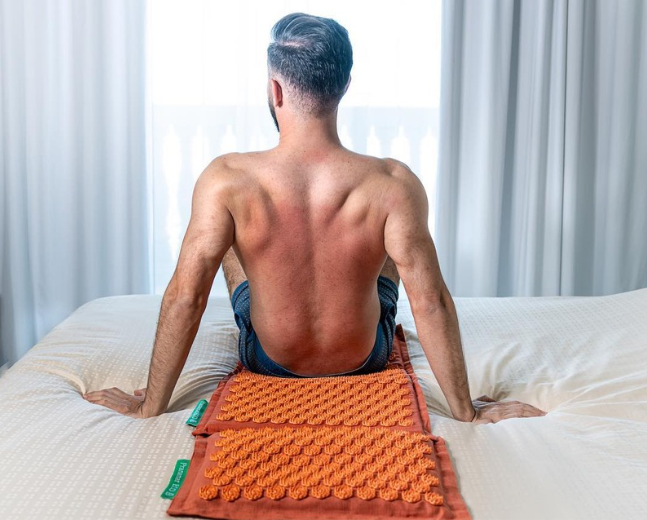
Pranamat introduces a physical method for relaxation.
How it works
When you lie on the mat:
- Acupressure pressure points stimulate the body
- Sensory input shifts attention away from pain
- Muscles begin to relax
Why this matters
This may help:
- Alleviate tension
- Reduce pressure around the sciatic nerve
- Support sciatic nerve pain relief
A supportive tool, not a cure
Pranamat is:
- A preparation tool
- Part of a broader routine
It does not:
- Replace medical care
- Treat underlying conditions
Instead, it helps prepare the body to sleep with sciatica more comfortably.
Night Routine for Sciatica Relief
Step 1: Gentle movement
Spend 5–10 minutes on:
- Stretching exercises
- Light mobility
Step 2: Warm relaxation
Use:
- Warm bath
- Heating pad
- Relaxation techniques
Step 3: Physical relaxation
Use Pranamat:
- Focus on breathing
- Allow muscles to release
Step 4: Optimize sleep position
- Choose a supported sleep position
- Use pillows to relieve pressure
Step 5: Wind down
- Reduce stimulation
- Keep lighting low
This routine can help you fall asleep faster and improve your chances of a good night's sleep.

When to Seek Medical Support
Signs to watch for
Seek immediate care if you experience:
- Severe pain
- Progressive muscle weakness loss
- Loss of bowel control
Working with a physical therapist
A physical therapist can:
- Perform a physical exam
- Identify movement issues
- Create a personalized treatment plan
A physical therapist may also recommend:
- Targeted exercises
- Physical therapy techniques
- Strategies to relieve sciatica pain
Working with a physical therapist can improve:
- Mobility
- Strength
- Long-term outcomes
Role of a healthcare provider
A healthcare provider can:
- Diagnose underlying causes
- Identify conditions like spinal stenosis
- Monitor nerve health
If symptoms persist for more than a week or worsen over a few weeks, consult a healthcare provider.
FAQ
Why is sciatica worse at night?
Reduced movement, increased stiffness, and higher awareness all contribute to stronger symptoms. Sciatica can cause shooting or burning pain down the back of the leg, impacting sleep quality and causing discomfort throughout the day.
What is the best way to sleep with sciatica?
Side sleeping with support or back sleeping with knees bent are commonly recommended.
How can I alleviate sciatica pain before bed?
Try:
- Gentle movement
- Heat therapy
- Relaxation techniques
These may help alleviate sciatica pain and improve comfort.
Can physical relaxation help?
Yes, it may:
- Reduce muscle tension
- Improve circulation
- Help you find relief
Conclusion
Living with sciatica pain doesn’t mean sleep is impossible.
But it does mean you need a strategy.
By focusing on:
- Movement
- Positioning
- Relaxation
Professional support when needed
…you can begin to:
- Relieve sciatica pain
- Improve sleep quality
- Move closer to a good night's rest
Better sleep doesn’t come from forcing it.
It comes from preparing your body to let go.