





 coupon
  Gift card


Wearable Recovery: Relieving Lower Back Pain on the Go
Introduction: The Epidemic of Active Back Pain
Lower back pain is one of the most prevalent musculoskeletal complaints in the world, affecting an estimated 80 percent of adults at some point in their lives. But among active populations — trail runners, golfers, hikers, cyclists, and outdoor enthusiasts — it presents a particularly disruptive challenge. These are people whose lifestyles depend on physical capability. A chronically aching lower back does not merely cause discomfort; it limits the activity that defines their quality of life.
The standard clinical response to active back pain has long been a combination of rest, anti-inflammatory medication, physiotherapy, and in severe cases, invasive intervention. For active individuals, these options are frequently inadequate: rest is antithetical to their lifestyle, medication carries systemic risks with chronic use, and physiotherapy is limited to scheduled sessions rather than continuous support.
The emergence of wearable recovery technology represents a fundamental shift in this paradigm. By providing continuous, hands-free recovery support during active daily life, wearable tools allow active individuals to address their back pain without pausing the activities that matter most to them.
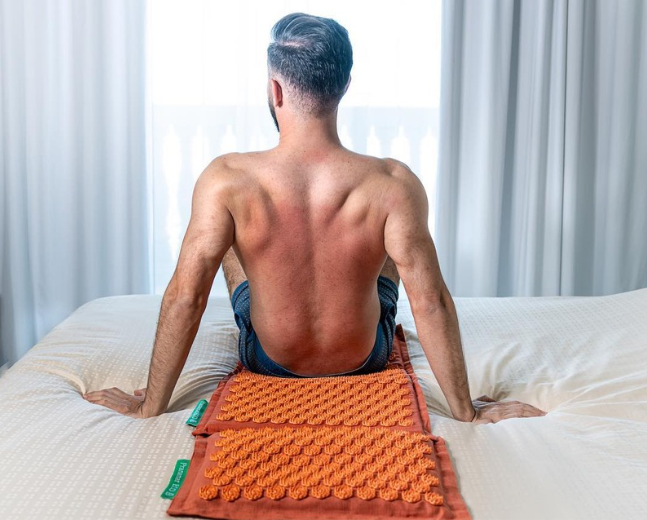
Fascial Restriction vs. Spinal Damage: Understanding the Real Cause
A critical distinction separates the vast majority of active back pain cases from the minority that involve genuine structural spinal pathology. Chronic lower back tension in active populations — hikers, golfers, cyclists — often stems from fascial restriction rather than spinal damage.
Fascial restriction develops when the dense connective tissue network surrounding the lumbar spine and deep back muscles becomes chronically shortened and adherent. This is the predictable outcome of repetitive loading patterns — the same hip flexion and extension cycle repeated thousands of times on a long trail run, or the consistent rotational loading of a golf swing performed daily — without adequate fascial release between sessions.
Restricted fascia does not show on an MRI. It does not produce the dramatic, acute pain of a disc injury. Instead, it creates a constant, compressive background tension that limits range of motion, refers pain across the lower back and into the hips, and generates the muscular guarding responses that make active people feel stiff, heavy, and chronically uncomfortable.
The therapeutic implication is significant: fascial restriction responds to mechanical stimulation, not rest. Lying still allows the fascia to further shorten and adhere. Targeted mechanical stimulation — sustained pressure applied to the fascial surface — disrupts adhesions, promotes microcirculatory flow into the restricted tissue, and restores the sliding capability between fascial layers that pain-free movement requires.
The Shift to Wearable Relief: Moving Beyond Pills
The limitations of pharmacological management for active back pain have become increasingly apparent. Non-steroidal anti-inflammatory drugs (NSAIDs) provide short-term symptomatic relief but do not address the underlying fascial restriction driving the pain. Chronic NSAID use carries significant cardiovascular and gastrointestinal risks. Muscle relaxants impair cognitive function and physical coordination, making them incompatible with active pursuits.
Wearable, passive stimulation provides continuous neurological distraction from pain signaling through a mechanism described in clinical literature as the Gate Control Theory. This theory, first proposed by Melzack and Wall in 1965 and extensively validated since, holds that non-painful stimulation of the cutaneous nervous system partially or fully inhibits the transmission of pain signals through the same spinal pathways.
In practical terms: mechanical stimulation applied to the skin over a painful area competes with and diminishes the pain signals transmitted from deeper tissue. This is why rubbing a bumped elbow instinctively reduces pain. Wearable tools that provide continuous cutaneous stimulation exploit this mechanism to deliver sustained, drug-free pain relief throughout the day.
Clinical evidence supports the efficacy of this approach. In Pranamat's clinical trials, 70% of trial participants reported that back pain completely disappeared with regular acupressure use — an outcome that reflects not merely symptomatic relief but genuine resolution of the underlying fascial restriction driving the pain.
Active Pain Management: The Case for Continuous Support
The central failure of session-based treatment — physiotherapy appointments, massage sessions, even home acupressure mat use — is the gap between sessions. Active individuals experiencing fascial restriction continue to load the affected tissue throughout their day, and without continuous support, the restriction rebuilds between treatments. Progress is made at each session and partially lost in the interval before the next.
Continuous wearable support fundamentally changes this dynamic. By maintaining mechanical stimulation throughout active periods — during a hike, on the golf course, at a standing desk — wearable recovery tools prevent the re-accumulation of fascial tension between dedicated treatment sessions, creating a continuous therapeutic arc rather than a series of interrupted interventions.
Pranamat: The Motion Collection Belt for Hands-Free Lumbar Support
The Pranamat Belt from the Motion Collection is engineered specifically for the active individual who requires continuous, hands-free recovery support for the lumbar region without compromising mobility.
The Belt wraps around the lower back and secures snugly against the lumbar fascia, positioning the lotus-spike surface in continuous contact with the area of greatest fascial restriction in most active back pain sufferers. As the wearer moves — walking a trail, completing a round of golf, or navigating a workday on their feet — the spikes maintain consistent mechanical stimulation of the lumbar cutaneous nervous system, continuously activating the Gate Control mechanism and promoting ongoing local microvascular activity in the deep lumbar fascia.
The result is a sustained therapeutic effect that extends the benefits of dedicated acupressure sessions across the entire active day. Users report a progressive reduction in the background tension that characterizes fascial restriction, as well as significant improvements in range of motion and a reduction in the referred pain into the hips and glutes that commonly accompanies chronic lumbar fascial tightness.
For trail runners who cannot stop mid-run to address building lower back tension, hikers who feel the cumulative compression of long descents, or golfers whose repetitive rotational loading chronically loads the L4-L5 segment, the Pranamat Belt represents a genuinely transformative recovery tool — one that works precisely when and where active individuals need it most.
Building a Complete Active Back Pain Recovery Protocol
The most effective protocol for active back pain combines wearable continuous support with dedicated passive recovery sessions and targeted mobility work.
During active periods — training sessions, outdoor activities, extended workdays — the Pranamat Belt maintains continuous lumbar mechanical stimulation, preventing fascial re-adherence and managing pain without pharmacological intervention. Immediately following intense activity, a 20 to 30-minute session on the Pranamat Mat provides full-body posterior chain release, addressing not just the lumbar region but the thoracic fascia, glutes, and upper hamstrings that frequently contribute to lower back pain through kinetic chain dysfunction.
Regular dedicated sessions on the full Pranamat Mat — lying for 30 to 40 minutes, ideally in the evening — consolidate the microcirculatory and fascial benefits of the daytime Belt use, promoting the deeper tissue repair that occurs optimally during rest and sleep.
FAQ: Wearable Recovery for Lower Back Pain
What causes lower back pain in active people?
In the majority of cases, lower back pain in active populations stems from fascial restriction — chronic shortening and adhesion of the connective tissue surrounding the lumbar muscles — rather than structural spinal pathology. Repetitive loading patterns without adequate fascial release between sessions are the primary driver.
What is neurological distraction in pain management?
Neurological distraction refers to the Gate Control mechanism, in which non-painful cutaneous stimulation partially or fully inhibits the transmission of pain signals through the same spinal pathways. Mechanical stimulation applied to the skin over a painful area competes with the pain signals, reducing the intensity of perceived pain without pharmacological intervention.
Heading
Can I wear the Pranamat Belt during physical activity?
Yes. The Pranamat Belt from the Motion Collection is designed specifically for use during active daily life. It provides continuous lumbar support and mechanical stimulation during hiking, walking, standing work, and low-impact recreational activity.
How long should I wear a wearable recovery device for back pain?
Wearable lower back recovery devices can be used continuously throughout active periods. Most users benefit from wearing the Belt for two to four hours during peak activity, supplemented by dedicated full-body acupressure mat sessions of 20 to 40 minutes for deeper tissue treatment.
Is passive wearable recovery safe to use every day?
Daily use of wearable passive recovery tools for back pain is both safe and beneficial. Consistent daily use creates a cumulative reduction in fascial restriction and a progressive improvement in lower back mobility and pain levels over four to eight weeks.
Conclusion
For active individuals whose lifestyles depend on physical capability, chronic lower back pain is not merely a medical inconvenience — it is a direct threat to everything that makes daily life meaningful. The emergence of wearable passive recovery technology offers a genuinely transformative solution: continuous, drug-free mechanical support that works with the body's natural neurological and circulatory mechanisms to resolve the fascial restriction driving most active back pain.
The Pranamat Belt from the Motion Collection makes this continuous support accessible without compromising the activity and mobility that define an active lifestyle. Combined with dedicated Pranamat Mat sessions for full-body posterior chain release, it creates a comprehensive active back pain management protocol that goes far beyond the limitations of session-based treatment — delivering recovery exactly where and when the active body needs it most.