





 coupon
  Gift card


Biohacking Muscle Recovery: Science-Backed Techniques
Introduction: Treating Recovery as an Active Science
For most of athletic history, recovery was understood as a passive event. You trained hard, you rested, and your body rebuilt itself. This model is no longer sufficient for athletes, biohackers, and high performers who understand that the recovery phase is not passive at all — it is the most biologically active phase of the training cycle.
Biohacking recovery means applying deliberate, science-backed techniques to accelerate and optimize the biological processes that rebuild damaged tissue, clear metabolic waste, and restore the nervous system to full function. It means refusing to leave adaptation to chance and instead using stacked modalities to engineer the fastest possible physiological return to peak performance.
This guide explores the science and practice of biohacking muscle recovery, from the cellular mechanics of hyperemia and oxygenation to the specific protocols used by elite athletes and leading human performance laboratories.
The Physiology of Rapid Recovery: Hyperemia and Oxygenation
At the cellular level, muscle recovery is fundamentally a problem of supply and demand. Damaged muscle fibers require a massive influx of oxygen, glucose, amino acids, and growth factors to rebuild. Simultaneously, they must efficiently export metabolic waste: hydrogen ions, carbon dioxide, and inflammatory cytokines that, if allowed to accumulate, prolong soreness and delay the return of functional strength.
The primary biological driver of rapid muscular repair is localized hyperemia — the dramatically increased blood flow to a specific tissue region. Hyperemia delivers the raw materials that cells need to repair and rebuilds the capillary integrity that allows future nutrient exchange. Artificially stimulating cell metabolism drastically reduces downtime between intense training sessions, allowing athletes to maintain higher training frequencies without accumulating unmanageable fatigue debt.
The challenge is that the body's baseline circulatory response to exercise is often insufficient to reach the deep fascial layers where micro-tears and metabolic waste accumulate. Standard cardiovascular recovery (light jogging, walking) increases macro-level blood flow but may bypass the dense capillary networks within tight, compressed fascial compartments. Biohacking recovery requires modalities that drive circulation directly into these deep compartments.
Essential Biohacking Techniques
Cold Therapy: Vasoconstriction as a Vascular Pump
Cold water immersion and cryotherapy have become standard tools in elite athletic recovery programs. The primary mechanism is vasoconstriction: exposure to cold forces peripheral blood vessels to contract, pushing blood toward the core. When the cold stimulus is removed, the vessels rapidly dilate in a rebound response, flooding the peripheral tissues with freshly oxygenated blood.
This vascular pump mechanism is the scientific basis for the biohacking recovery approach of stacking cold constriction with subsequent vasodilatory therapies. The contrast between extreme cold and deliberate vasodilation creates a dramatically more powerful circulatory response than either modality produces independently.
Optimal cold immersion protocols typically involve 10 to 15 minutes in water between 10 and 15 degrees Celsius, followed immediately by a vasodilatory intervention.
Red Light Therapy: Cellular Energy Production
Photobiomodulation, delivered through targeted red and near-infrared light wavelengths (typically 630 to 850 nanometers), penetrates 2 to 7 centimeters into tissue, stimulating mitochondrial cytochrome c oxidase. This enzymatic stimulation enhances ATP production in damaged muscle cells, accelerating the repair cycle without any systemic metabolic cost to the athlete.
Multiple peer-reviewed studies have demonstrated meaningful reductions in post-exercise DOMS and faster restoration of muscular strength following photobiomodulation sessions administered within 24 hours of intense exercise. The technology has moved from clinical rehabilitation settings into consumer-grade panels that athletes use daily at home.
Tactile Acupressure: The Analog Biohack
Biohacking recovery relies on stacking modalities to create a vascular pump, and among the most powerful and accessible vasodilatory techniques available is passive acupressure. Unlike cold therapy, which requires equipment, or red light therapy, which demands a significant financial investment, acupressure achieves potent physiological results through elegant mechanical simplicity.
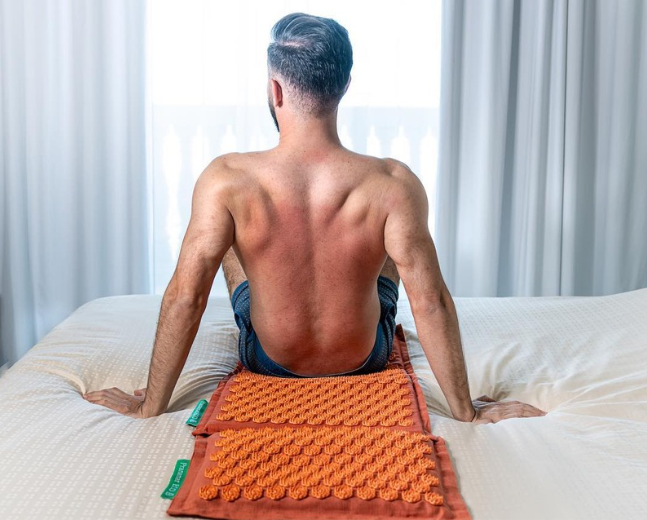
The thousands of lotus-shaped spikes of an acupressure mat stimulate the dense network of mechanoreceptors in the skin and superficial fascia. This stimulation triggers a profound local microcirculatory response, dramatically increasing the intensity of blood flow to the tissues in contact with the mat. Simultaneously, the cutaneous nervous system signals the brain to release a significant cascade of beta-endorphins — the body's endogenous painkillers — which reduce perceived soreness while promoting deep muscular relaxation.
When acupressure is administered immediately following a cold therapy session, the vasodilatory effect is compounded by the rebound dilation from the preceding vasoconstriction. The result is a powerful vascular pump mechanism that drives oxygenated blood deep into fascial compartments that passive rest alone cannot reach.
Advanced Stacking Protocols
Elite biohackers and sports science practitioners have developed specific recovery stacking sequences designed to maximize the biological window of opportunity that follows intense training.
A highly effective post-training biohacking recovery stack begins with a 10-minute cold immersion session within 30 minutes of completing exercise. This triggers immediate vasoconstriction and begins clearing surface-level lactate. Upon exiting the cold, the athlete moves directly to the acupressure mat, allowing the rebound vasodilation to be amplified by the lotus spike stimulation.
A 20-minute acupressure session following cold immersion drives a powerful wave of freshly oxygenated blood into the previously constricted peripheral tissues, creating the localized hyperemia that biologically drives the next phase of tissue repair. Red light therapy applied to the most damaged muscle groups during or following the acupressure session further accelerates mitochondrial ATP production in the affected fibers.
This three-modality stack — cold, acupressure, red light — addresses vasoconstriction, vasodilation, mechanical stimulation, and cellular energy production in a single 45-minute recovery window. Biohackers who apply this protocol consistently report dramatically reduced recovery timelines and the ability to sustain higher training loads without accumulating systemic fatigue.
Pranamat: Localized Hyperemia Without Electrical Inputs
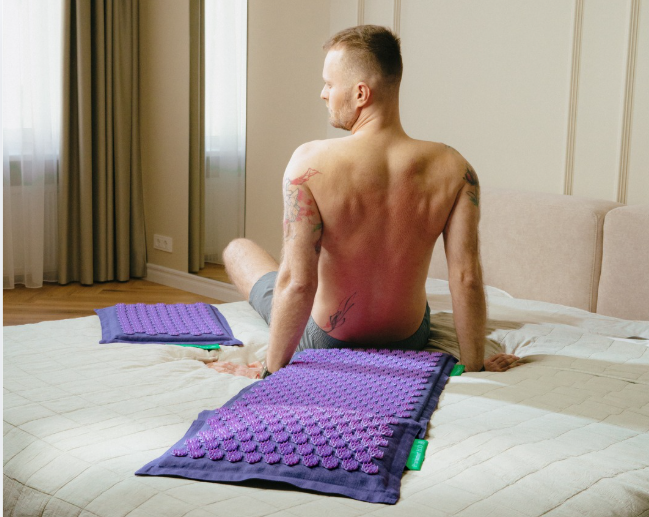
Pranamat occupies a unique position in the biohacking recovery stack because it achieves profound physiological results — measurably increased local microcirculation and a significant beta-endorphin cascade — without requiring electrical power, specialized infrastructure, or any active effort from the athlete.
This makes it arguably the most accessible biohack for achieving localized hyperemia available to the modern athlete. While PEMF devices, red light panels, and pneumatic compression systems all deliver their respective benefits, they require consistent access to power sources, calibrated equipment, and, in many cases, professional supervision. The Pranamat delivers measurably increased local microcirculation through purely mechanical means.
Clinical data confirms that targeted acupressure significantly increases the intensity of local microcirculation, with the effect detectable within the first minutes of a session and compounding throughout a 20 to 40-minute protocol. For the biohacker who values evidence-based interventions and protocol simplicity, this represents exceptional value.
The Pranamat is particularly effective as a biohacking tool when used as the vasodilatory phase of a cold-contrast stack, or as a standalone evening recovery session to maintain circulatory activity in the deep fascial tissues overnight. Its portability makes it equally functional in a home gym, a hotel room, or a professional athletic facility.
FAQ: Biohacking Recovery Techniques
What is the most important principle in biohacking recovery?
The most important principle is modality stacking: combining physiological techniques whose mechanisms complement and amplify each other. Cold therapy for vasoconstriction followed by acupressure for vasodilation is a foundational example of how two modalities create a vascular pump effect that neither achieves independently.
How quickly can biohacking techniques reduce muscle soreness?
When applied within the first two hours post-exercise, stacked modalities including cold therapy and acupressure can measurably reduce DOMS severity within 24 hours and accelerate functional strength restoration by 30 to 50 percent compared to passive rest alone.
Is acupressure a proven recovery biohack?
Yes. Clinical studies confirm that acupressure significantly increases local microcirculation, triggers beta-endorphin release, and produces measurable muscular relaxation. Over 93% of participants in clinical trials reported significant relief from muscular discomfort after consistent acupressure sessions.
Can I use acupressure after cold therapy?
This is one of the most effective biohacking recovery sequences available. Cold therapy triggers vasoconstriction, and when immediately followed by acupressure, the rebound vasodilation is amplified by the mechanical stimulation of the lotus spikes, creating a powerful localized hyperemia response.
How does biohacking recovery differ from basic recovery?
Basic recovery relies on passive rest and time. Biohacking recovery uses deliberate, evidence-based modalities stacked in specific sequences to actively accelerate the biological processes of tissue repair, waste clearance, and nervous system restoration, compressing a recovery timeline that would otherwise take days into a matter of hours.
Conclusion
Biohacking recovery represents the frontier of athletic performance science. By treating the recovery phase not as passive rest but as an active biological opportunity, athletes and high performers can meaningfully accelerate the adaptation cycle, reduce injury risk, and sustain training intensities that passive recovery protocols cannot support.
The core principle is simple: localized hyperemia drives tissue repair, and deliberate modality stacking creates more powerful hyperemia than any single technique alone. Whether through cold-to-acupressure contrast, red light photobiomodulation, or the elegant analog biohack of the Pranamat, the future of muscle recovery belongs to those who approach it with the same scientific rigor they bring to their training.