





 coupon
  Gift card


The Importance of Rest Days for Long-Term Athletic Performance
Introduction: The Myth of "No Days Off"
The “no days off” ethos has become one of the most pervasive and most physiologically destructive myths in modern athletic culture. Social media amplifies the narrative of the athlete who trains every single day, celebrating the apparent dedication while ignoring the biological reality that this approach systematically undermines the very adaptation it claims to promote.
The truth is stark: muscles do not grow during training. Cardiovascular fitness does not improve during training. Performance does not develop during training. All of these adaptations occur exclusively during recovery — and the most profound recovery of all occurs during dedicated rest days in which the training stimulus is completely absent. Rest days are essential not only for physical health but also for mental health, supporting emotional well-being and reducing stress.
Understanding this fundamental principle of sports physiology is not merely academic. The way the body responds to both exercise and rest involves adapting physiologically and psychologically, improving systems like the cardiovascular and nervous systems. Too much exercise without adequate rest can undermine both physical and mental health. It is the difference between consistent progression and the plateau of accumulated fatigue, between long-term athletic development and the performance-destroying cycle of overtraining.
Recognizing the importance of knowing when to take a rest day is crucial to avoid the negative consequences of overtraining and to maintain optimal health and performance.

The Biology of Adaptation: When Growth Actually Happens
The Supercompensation Principle
Exercise physiologists use the term supercompensation to describe the biological process through which the body adapts to training stress. The supercompensation cycle proceeds through four distinct phases: training stress, which temporarily reduces performance capacity; fatigue, during which the body mobilizes repair resources; recovery, during which performance capacity returns to baseline; and supercompensation, during which performance capacity temporarily exceeds the pre-training baseline.
Hypertrophy — muscle growth — and cardiovascular adaptation occur exclusively during the recovery and supercompensation phases of this cycle, not during the acute stress of training. Training is the stimulus that initiates adaptation; rest is the environment in which adaptation actually takes place.
Critically, the supercompensation phase is a narrow biological window. The timing of the next training session relative to this window determines whether the athlete accumulates positive adaptation or compounds fatigue. Training during the supercompensation phase magnifies the adaptive response. Training during the fatigue phase before recovery is complete adds additional stress to an already impaired system, compressing the supercompensation response and progressively reducing both performance and adaptation capacity.
Hormonal Architecture of Adaptation
The hormonal environment of rest days is categorically different from that of training days in ways that are essential for adaptation. During high-intensity training, cortisol — the primary catabolic stress hormone — is released in quantities that temporarily suppress testosterone synthesis and impair the mTOR signaling pathway central to muscle protein synthesis. Stress hormones like cortisol and adrenaline are elevated during intense exercise, and must be reduced during rest and recovery to support proper adaptation and overall health.
Skipping rest days leads to cumulative cortisol buildup, which breaks down muscle tissue. This is not a theoretical risk but a measurable biological consequence of insufficient recovery time. Chronically elevated cortisol suppresses the immune system, impairs sleep quality (which further reduces growth hormone secretion), and in severe cases, actively catabolizes muscle protein — the exact opposite of the adaptation the athlete is training to achieve. Sleep deprivation caused by high stress hormones can further impair recovery and performance.
Rest days allow cortisol to return to baseline, creating the hormonal environment in which testosterone and growth hormone can drive protein synthesis and cardiovascular adaptation unimpeded by catabolic interference. Rest and recovery also support the central nervous system, which is essential for optimal performance and injury prevention. Rest days lower cortisol and adrenaline, which can spike with overtraining, helping to improve overall well-being.
The Consequences of Overtraining: Cortisol and Injury
The Overtraining Syndrome
When an athlete trains without adequate rest for extended periods, the physiological debt accumulates beyond what the body can service. The result is a clinical state known as overtraining syndrome (OTS), characterized by sustained performance decrement, persistent fatigue despite rest, mood disturbances including depression and anxiety, elevated resting heart rate, frequent illness due to immunosuppression, and chronic musculoskeletal pain.
Recovery from overtraining syndrome requires weeks to months of dramatically reduced training load. In severe cases, athletes require complete training abstention for months to restore the hormonal and neurological baseline necessary for training to resume productively.
The cumulative cortisol buildup that drives OTS also directly increases injury risk by impairing the collagen synthesis required for tendon and ligament health, reducing the neuromuscular coordination that protects joints under load, and creating the psychological fatigue that leads athletes to make technical errors that generate acute injuries.
Why Overtraining is a False Economy
The athlete who trains seven days a week in pursuit of faster progress is making a false physiological trade. In exchange for the additional training stimulus, they sacrifice the hormonal environment, neurological recovery, and tissue repair capacity that convert training stimuli into actual adaptation. The net result is frequently less total adaptation than a five-day training week with two properly structured rest days would produce.
The Role of Rest Day Nutrition and Sleep
Rest days are not physiologically passive. The body’s repair and adaptation machinery runs at maximum capacity during recovery periods, consuming significant nutritional resources in the process. Protein intake on rest days should equal or approach training day intake to provide the amino acid substrate required for ongoing muscle protein synthesis. Rest days are also essential for muscle repair and for replenishing glycogen levels and energy stores depleted during training, as they give the body time to restore glycogen (stored carbohydrates) and ATP, the body's primary energy sources.
Sleep quality on rest days is frequently superior to sleep quality on training days because cortisol levels are lower and the parasympathetic nervous system has more opportunity to dominate the sleep cycle. Prioritizing sleep extension on rest days — sleeping an additional 60 to 90 minutes beyond the typical training-day sleep duration — dramatically amplifies the hormonal and neurological recovery that rest days provide. Sleep deprivation can impair muscle repair and increase muscle soreness, making rest days and good sleep routines critical for effective recovery.

A Dedicated 40-Minute Rest Day Session with Pranamat
For athletes who understand that rest days are when adaptation actually happens, the question is not whether to train but how to maximize the biological conditions for recovery without adding any training stimulus. Both passive recovery—such as a passive rest day involving complete rest or self-care—and active recovery—featuring light activities like walking, foam rolling, or using a rowing machine—can be part of a recovery day, each supporting the body in different ways.
Clinical evidence confirms that 100% of participants in Pranamat trials felt less tired and apathetic after committing to routine acupressure recovery. This statistic captures something that athletes instinctively recognize: dedicated recovery sessions that actively support the body’s repair processes produce a qualitatively different sense of physical wellbeing than passive rest alone.
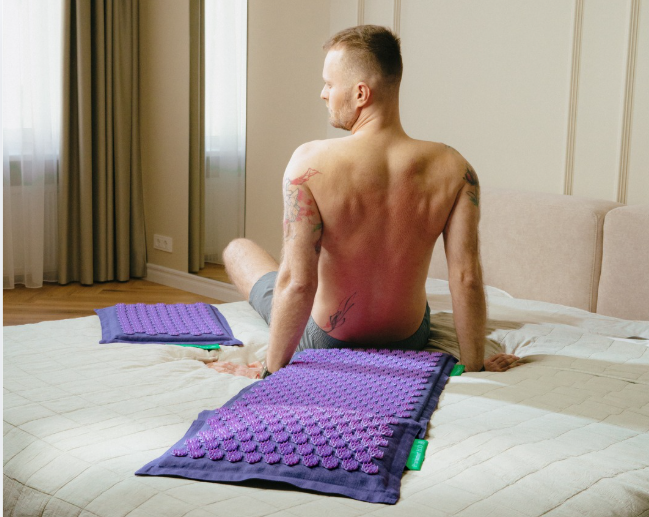
A dedicated 40-minute Pranamat session on rest days is specifically designed to maximize metabolic repair without expending any energy. The lotus-spike stimulation drives local microcirculatory activity throughout the posterior chain, delivering oxygen and repair factors to tissue that is undergoing its primary repair cycle during the rest-day window. Active recovery days often include low intensity activities such as light weightlifting, foam rolling, or using a rowing machine, all of which promote blood flow and muscle healing. Simultaneously, the sustained parasympathetic shift of a 40-minute session reaches a depth of nervous system down-regulation that shorter sessions cannot achieve, creating the neurological recovery environment essential for CNS restoration after a heavy training week.
The elevated beta-endorphin release characteristic of longer acupressure sessions also directly supports the mood and psychological resilience that rest day inactivity can undermine in highly motivated athletes. Many athletes find extended rest difficult psychologically because training provides an important mood-regulatory function. The endorphin cascade of a 40-minute Pranamat session satisfies this neurochemical need while remaining completely compatible with the physiological rest the body requires. Passive recovery and passive rest days are also important for injury prevention and overall recovery.
Building Rest Days Into the Training Week
The optimal frequency and structure of rest days depends on training load, training age, individual recovery capacity, and other factors such as age, training intensity, and personal needs. As a general framework, athletes training four or more days per week should plan for two dedicated rest days per week, separated if possible to prevent extended training blocks without recovery. The American Council on Exercise recommends that athletes engaging in high-intensity exercise should schedule a rest day every seven to ten days to allow for adequate muscle recovery and help prevent injuries, though some may need more frequent rest days, such as two per week. Planning rest days as part of a balanced fitness routine helps achieve fitness goals and supports disease control by giving the body time to recover, repair, and maintain good health. Athletes in periodized training programs should ensure that each training block includes planned recovery weeks in which training load is reduced by 40 to 60% and rest day frequency is increased.
The structure of rest day recovery can be improved by incorporating dedicated Pranamat sessions in the morning (targeting fresh parasympathetic recovery) or evening (optimizing the pre-sleep recovery environment), mobility work to maintain joint range of motion without loading the musculoskeletal system, and nutritional protocols that support protein synthesis and glycogen replenishment without the caloric demand of training days. Staying active with low-intensity activities such as walking or stretching on rest days helps maintain blood flow, promotes muscle healing, and prepares the body for the next workout. Mental breaks from exercise prevent mental fatigue and burnout, ensuring continued enthusiasm for future training sessions. Rested muscles and a refreshed central nervous system allow for harder training, heavier lifting, and better form in subsequent training sessions, helping to prevent plateaus.
FAQ: The Importance of Rest Days for Athletic Performance
Will I lose fitness if I take rest days?
No. Detraining — the loss of adaptation — begins to occur only after approximately two weeks of complete inactivity at training-calibrated fitness levels. Rest days lasting one to two days not only do not produce detraining but are physiologically essential for the adaptation process to complete its biological cycle. In fact, rest days are crucial for achieving fitness gains, as they allow the body to repair, recover, and grow stronger, directly supporting improvements in strength and endurance.
What is cumulative cortisol buildup?
Cumulative cortisol buildup occurs when training frequency and intensity exceed the body's recovery capacity, preventing cortisol from returning to baseline between sessions. Chronically elevated cortisol suppresses testosterone, impairs protein synthesis, and in severe cases, actively breaks down muscle tissue — the opposite of the adaptation training is intended to produce.
How should I structure a rest day for maximum recovery?
Prioritize sleep, particularly sleep extension beyond your training-day baseline. Getting enough rest is crucial for recovery, as inadequate rest can lead to trouble sleeping and hinder performance. Maintain protein intake at or near training-day levels. Perform a dedicated 40-minute Pranamat session to actively support microcirculatory repair and nervous system recovery. Engage in light mobility work if appropriate, avoiding any training stimulus.
Can I use an acupressure mat on rest days?
Acupressure mat use on rest days is strongly recommended. A dedicated 40-minute session provides intense circulatory support to repairing tissue, deep parasympathetic nervous system recovery, and a beta-endorphin release that supports the mood regulation that can be disrupted by training day absence.
How many rest days do elite athletes take?
Most elite athletic programs incorporate one to two complete rest days per week, with additional structured recovery weeks during periodization cycles. The specifics vary by sport, training phase, and individual athlete, but the principle that adequate rest is essential for sustained elite performance is universal and not negotiable at the highest competitive levels. Some athletes may require extra rest or more rest depending on factors such as training intensity, age, and individual recovery needs, and should adjust their rest days accordingly.
Conclusion
The myth of “no days off” is not merely a cultural affectation — it is a physiologically destructive belief that systematically undermines the athletic development it claims to support. Hypertrophy, cardiovascular adaptation, and genuine performance improvement occur exclusively during recovery, and they occur most profoundly during dedicated rest days in which the training stimulus is completely absent and the body’s repair resources operate without competition. Rest days are essential for good health, supporting immune function, hormonal balance, and physical healing, and are also crucial to build muscle by allowing muscle fibers to repair and strengthen.
For athletes who want to train hard and train long, rest days are not a compromise with dedication — they are its ultimate expression. A 40-minute Pranamat session on rest days transforms passive absence of training into an active biological investment in the adaptation that makes every training session more productive. This is not recovery as an afterthought; it is recovery as the central strategy of long-term athletic performance.