





 coupon
  Gift card


The Role of Microcirculation in Healing Sports Injuries
Introduction: Why Some Injuries Refuse to Heal
Every athlete has experienced the frustrating phenomenon of an injury that simply will not resolve. Weeks pass, standard protocols are followed — ice, elevation, anti-inflammatory medication, rest — and yet the tissue refuses to fully recover. Range of motion remains limited. A dull, persistent ache lingers. The injury is not getting worse, but it is not getting better.
In many cases, the underlying reason is not a failure of the body's healing mechanisms but a failure to deliver those mechanisms to the site of the injury. The body's ability to repair damaged tissue is exquisitely dependent on the health and activity of the capillary network — the microcirculation — that serves every square millimeter of tissue. When this network is compromised or insufficient, even the most sophisticated macroscopic treatment protocols cannot compensate.
This guide provides a clinical deep dive into the role of microcirculation in healing sports injuries, explaining precisely how the capillary network physically rebuilds damaged tissue and how targeted interventions that improve microcirculatory function can resolve injuries that standard treatment approaches have failed to heal.
Macro vs. Microcirculation: Understanding the Capillary Network
The Two Tiers of the Circulatory System
The human circulatory system operates on two fundamentally different scales. Macrocirculation — the large arteries, veins, and cardiac output — is responsible for moving substantial volumes of blood between the organs and the periphery. It is what we measure when we take a blood pressure reading or calculate cardiac output.
Microcirculation refers to the dense network of arterioles, capillaries, and venules that penetrate every tissue to a depth of approximately 100 micrometers. It is within this capillary network that the actual exchange of oxygen and nutrients to damaged muscle fibers takes place. The capillaries are the delivery endpoints of the entire cardiovascular system — the point at which biological material crosses from the bloodstream into the tissue, and from the tissue back into the bloodstream.
Without robust microcirculation, macro-level blood flow bypasses deep fascial injuries, delivering inadequate oxygen and nutrients to the actual sites of tissue damage while failing to clear the metabolic waste and inflammatory byproducts that accumulate around micro-tears and cellular debris.
The Anatomy of Microcirculatory Failure in Sports Injuries
In healthy, well-perfused tissue, the capillary network maintains a dynamic equilibrium: blood flows continuously through the capillary bed, delivering oxygen and glucose while collecting carbon dioxide and metabolic waste for clearance through the venous system and lymphatic drainage.
When tissue is damaged by repetitive stress, acute trauma, or chronic compression, this equilibrium is disrupted. The inflammatory response that follows injury causes local capillaries to become more permeable, allowing plasma to leak into the surrounding tissue and creating localized swelling. This swelling compresses the capillary network itself, reducing the very blood flow the tissue needs to repair itself. Fascial tightening compounds this problem by creating compartmental pressure that further limits microcirculatory access to the injury site.
This is the fundamental paradox of sports injury: the biological response to injury initially impairs the circulatory function that healing requires. Resolving this paradox is the central challenge of advanced sports injury rehabilitation.
How Capillaries Heal Tissue: Oxygenation and Waste Removal
The Repair Cascade
Tissue repair following sports injury proceeds through a sequential cascade: the inflammatory phase, the proliferative phase, and the remodeling phase. Each phase is dependent on adequate microcirculatory delivery of specific biological agents.
During the inflammatory phase, macrophages and neutrophils migrate to the injury site to clear debris. Their delivery depends entirely on capillary perfusion. During the proliferative phase, fibroblasts deposit collagen to rebuild torn tissue, a process that requires continuous oxygen and glucose delivery via the capillary network. During remodeling, the newly deposited collagen is reorganized along lines of mechanical stress — again, a process driven by the metabolic activity that only robust capillary perfusion can sustain.
When microcirculation is insufficient at any phase of this cascade, the repair process stalls. The injury persists not because the body lacks the biological capacity to heal, but because the delivery infrastructure cannot serve the injury site adequately.
Angiogenesis: Building New Blood Vessels
One of the most remarkable aspects of injury healing is the process of angiogenesis — the formation of new capillary networks within healing tissue. Adequate mechanical stimulation of the surrounding tissue has been shown to promote angiogenic signaling, encouraging the growth of new capillary connections that dramatically improve long-term perfusion of the injury site.
This is one reason why controlled mechanical stimulation of injured tissue — through targeted massage, acupressure, or other mechanically mediated therapies — is not merely palliative but genuinely therapeutic. By promoting angiogenesis and maintaining capillary patency, mechanical stimulation creates the vascular infrastructure that sustained tissue repair requires.
Heading H2
Lorem ipsum dolor sit amet, consectetuer adipiscing elit. Aenean commodo ligula eget dolor. Aenean massa. Cum sociis natoque penatibus et magnis dis parturient montes, nascetur ridiculus mus. Donec quam felis, ultricies nec, pellentesque eu, pretium quis, sem. Nulla consequat massa quis enim. Donec pede justo, fringilla vel, aliquet nec, vulputate eget, arcu. In enim justo, rhoncus ut, imperdiet a, venenatis vitae, justo. Nullam dictum felis eu pede mollis pretium. Integer tincidunt. Cras dapibus. Vivamus elementum semper nisi. Aenean vulputate eleifend tellus. Aenean leo ligula, porttitor eu, consequat vitae, eleifend ac, enim. Aliquam lorem ante, dapibus in, viverra quis, feugiat a, tellus. Phasellus viverra nulla ut metus varius laoreet. Quisque rutrum. Aenean imperdiet. Etiam ultricies nisi vel augue. Curabitur ullamcorper ultricies nisi. Nam eget dui. Etiam rhoncus. Maecenas tempus, tellus eget condimentum rhoncus, sem quam semper libero, sit amet adipiscing sem neque sed ipsum.
Clinical Evidence: How Acupressure Increases Microcirculation
Clinical studies confirm that acupressure significantly increases the intensity of local microcirculation. The mechanism is well understood: the mechanical stimulation of the cutaneous lotus spikes activates a dense network of mechanoreceptors and thermoreceptors in the skin and superficial fascia, triggering a local axon reflex that signals arteriolar dilation.
This arteriolar dilation dramatically increases blood flow through the capillary bed underlying the stimulated tissue. The result is a measurable increase in local microcirculatory intensity — more oxygen delivered, more metabolic waste cleared, more biological repair materials reaching the actual site of tissue damage.
The 2014 clinical trials on Pranamat demonstrated precisely this effect, confirming that targeted acupressure produces a significant, measurable increase in the intensity of local microcirculation and cell metabolism. These are not subjective improvements in perceived comfort but objective physiological changes in capillary blood flow and cellular metabolic activity.
Pranamat: Citing Clinical Evidence on Local Microcirculation
The Pranamat is clinically validated as a tool for significantly increasing local microcirculatory intensity. For athletes and rehabilitation patients dealing with sports injuries that have proven resistant to standard treatment, this represents a meaningful therapeutic opportunity.
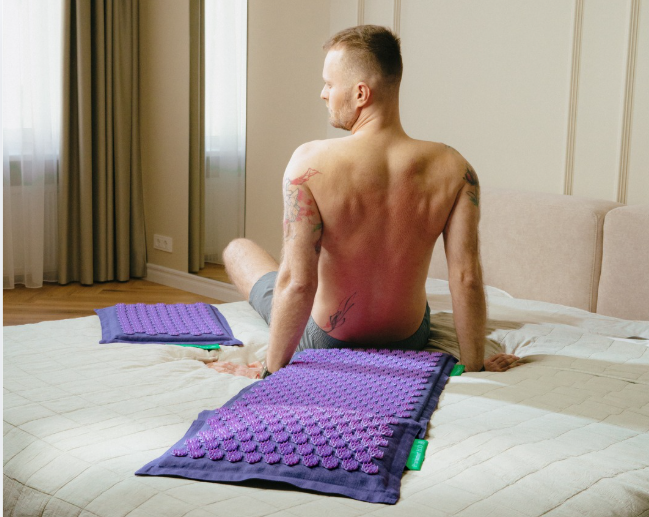
When the Pranamat is used consistently over an injured area — for example, lying with the lower back in contact with the mat to address chronic lumbar tissue injury, or standing on the Mini to target plantar fascia damage — the sustained mechanical stimulation maintains arteriolar dilation and capillary patency in the underlying tissue throughout each session.
Over repeated sessions, this sustained microcirculatory enhancement accelerates each phase of the tissue repair cascade, delivering the oxygen, nutrients, and growth factors required for collagen deposition and tissue remodeling while simultaneously clearing the inflammatory debris that would otherwise impede healing.
The clinical data from Pranamat trials shows not merely perceived improvements but measurable biological outcomes: significantly increased local microcirculation intensity, increased cell metabolism, and in longitudinal clinical surveys, a 70% rate of complete disappearance of chronic back pain among participants who used the mat consistently.
Practical Applications: Improving Microcirculation in Specific Injuries
Lower Back and Lumbar Injuries
Chronic lower back injuries are among the most prevalent and most resistant to standard treatment in the athletic population. The deep lumbar fascia is a notoriously poorly perfused tissue, and injuries within it are frequently underserved by macro-level circulatory interventions. Daily 20 to 40-minute Pranamat sessions targeting the lumbar region provide sustained microcirculatory support to the most challenging healing environment in the posterior chain.
Plantar Fascia and Foot Injuries
The plantar fascia is a dense, poorly vascularized structure that heals slowly under the best of circumstances. The Pranamat Mini, used with full body weight through standing or with moderate pressure through sitting, delivers intense mechanical stimulation directly to the plantar fascial surface, dramatically increasing local microcirculation in a tissue that is particularly dependent on external stimulation to maintain adequate capillary perfusion.
Hamstring and Posterior Chain Injuries
The hamstring complex is highly susceptible to recurrent injury partly because incomplete healing of initial micro-tears creates scar tissue with reduced vascularity. Lying on the Pranamat with the hamstrings in contact with the lotus spikes provides consistent mechanical stimulation that supports capillary patency in the healing tissue and promotes the angiogenic signaling necessary for building robust new capillary networks within the remodeling scar.
FAQ: Microcirculation and Sports Injury Healing
What is the difference between macro and microcirculation?
Macrocirculation refers to the large-vessel blood flow between the heart and organs. Microcirculation refers to the capillary network that performs the actual exchange of oxygen, nutrients, and waste at the tissue level. Injuries heal through microcirculatory processes, not macro-level blood flow alone.
Why does improved microcirculation heal sports injuries faster?
Improved microcirculation delivers more oxygen, glucose, and repair-specific growth factors to the injury site while more efficiently clearing metabolic waste and inflammatory debris. Each phase of the tissue repair cascade — inflammation, proliferation, remodeling — proceeds faster when microcirculatory support is adequate.
Can I improve microcirculation without medical treatment?
Yes. Targeted mechanical stimulation through acupressure, compression therapy, and regular low-intensity movement all promote microcirculatory health. Clinical studies confirm that consistent acupressure produces measurable increases in local microcirculatory intensity without any pharmaceutical or invasive intervention.
How long does it take for acupressure to improve microcirculation?
Measurable increases in local microcirculatory intensity are detectable within a single acupressure session. Cumulative improvements in tissue perfusion and injury healing outcomes are typically observed over four to eight weeks of daily or near-daily sessions.
Is the oxygen and nutrient exchange through capillaries important for recovery?
It is not merely important — it is the rate-limiting step of tissue repair. Without adequate oxygen and nutrient exchange through the capillary network, every other aspect of the healing process is impaired. Supporting microcirculatory health is therefore the highest-leverage intervention in sports injury rehabilitation.
Conclusion
Microcirculation is the biological engine of sports injury healing. Without robust capillary perfusion delivering oxygen, nutrients, and repair factors to the actual sites of tissue damage while clearing the metabolic debris that impedes healing, the body's extraordinary regenerative capacity is systematically underutilized.
Clinical evidence confirms that targeted acupressure therapy — specifically the lotus-spike stimulation provided by the Pranamat — produces significant, measurable increases in local microcirculatory intensity and cell metabolism. For athletes struggling with resistant injuries, chronic tissue damage, or slow recovery from intense training, integrating consistent acupressure therapy into a comprehensive rehabilitation protocol may be the most important intervention that standard treatment approaches have overlooked.