





 coupon
  Gift card


Does Acupressure Boost Libido? The Surprising Side Effect
Introduction: The Physical and Mental Barriers to Desire
Of all the conversations that wellness culture struggles to have clearly, libido may be the most loaded. Low sexual desire is estimated to affect between 26 and 43 percent of women and between 15 and 25 percent of men at any given point in their lives, making it among the most prevalent and most underaddressed dimensions of physical and relational health. And yet the clinical conversation around it remains constrained to a narrow range of pharmaceutical and psychotherapeutic options that address the psychological surface of a profoundly somatic problem.
The reality is that libido is, at its most fundamental level, a physiological state. It is the product of hormonal balance, nervous system regulation, localized blood flow, and the basic physical ease of a body that feels alive and present rather than exhausted, tense, and overloaded. When these physiological conditions are compromised — by chronic stress, elevated cortisol, poor circulation, and the systemic physical apathy of a nervous system running perpetually at high alert — desire does not simply diminish. It becomes physiologically unavailable, as completely as a muscle that has been chronically contracted cannot generate force on demand.
This is where the conversation about an acupressure mat libido connection becomes genuinely interesting. Not as a novelty claim or a provocative wellness headline, but as a physiologically coherent investigation into how a tool designed for stress reduction and microcirculatory enhancement might, through those exact mechanisms, address the root physiological barriers to sexual vitality.
This article explores the science of somatic nervous system arousal, the specific acupressure meridians that influence reproductive circulation and hormonal balance, and what the emerging body of user experience and clinical evidence suggests about acupressure as a tool for those seeking to boost libido naturally.
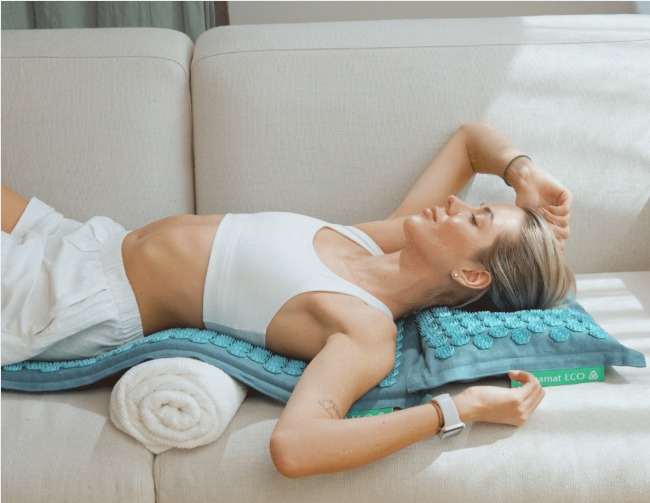
The Stress-Libido Connection: How Cortisol Kills Desire
The Cortisol Override
The most direct and most significant physiological barrier to libido in the modern adult is chronically elevated cortisol. Low libido is heavily influenced by systemic stress, high cortisol, and poor pelvic blood flow — a triad of physiological conditions that are simultaneously epidemic in contemporary life and consistently overlooked in the clinical management of sexual health.
The mechanism is direct. Cortisol and sex hormones — testosterone and estrogen — compete for the same biochemical precursor: pregnenolone. When the body is under sustained stress, it prioritizes cortisol synthesis from the available pregnenolone pool, effectively starving the pathways that produce testosterone and estrogen. The result, at the hormonal level, is a measurable reduction in the circulating sex hormones that provide the biological substrate of desire.
Beyond the hormonal mechanism, cortisol maintains the sympathetic nervous system in an alert, high-vigilance state that is physiologically incompatible with somatic arousal. The sympathetic state is the state of scanning for threats, not the state of physical ease, sensory availability, and the parasympathetic openness that genuine sexual response requires. Until the nervous system transitions from sympathetic dominance to parasympathetic regulation, libido remains not merely suppressed but physically inaccessible.
The Physical Apathy Problem
Chronic cortisol elevation also produces what clinicians sometimes call physical apathy — a pervasive sense of bodily heaviness, reduced sensory aliveness, and motivational flatness that makes the body feel like a machine running on minimum fuel rather than a sensory instrument capable of pleasure. This is not a psychological construct or a mood disorder. It is the measurable physiological consequence of a nervous system that has been running in stress mode for too long without adequate recovery.
Physical touch therapies that stimulate massive releases of beta-endorphins act to reduce this physical apathy and improve arousal through an endogenous neurochemical mechanism. Beta-endorphins — the body's endogenous opioid peptides — directly counteract the neurological heaviness of chronic stress, restoring the sensory aliveness and physical openness that are the somatic preconditions of desire. This is not a metaphorical effect but a biochemical one, measurable in the same neurochemical terms as the effects of any pharmaceutical anxiolytic.

The Acupressure Mat Libido Connection: What the Science Shows
How Somatic Stimulation Bypasses the Psychological
The acupressure mat libido connection operates through somatic nervous system arousal — the direct stimulation of the body's physical sensory network — rather than through any psychological or cognitive pathway. This distinction is crucial. The parasympathetic shift produced by acupressure mat use does not require the user to cognitively disengage from stress or actively practice relaxation. The body's nervous system responds to the physical input regardless of what the mind is doing.
This is why acupressure is particularly interesting as a tool for those seeking to boost libido naturally in the context of stress-related desire loss. Many conventional approaches to low libido require cognitive engagement — therapy, mindfulness practice, relationship-focused communication exercises — which are valuable but which presuppose a degree of psychological bandwidth that chronically stressed individuals may not reliably possess. Somatic nervous system arousal through physical stimulation bypasses this requirement, creating the physiological conditions for desire through the body's own sensory pathways without demanding anything from the overstretched cognitive mind.
The Reddit Conversation You've Probably Already Seen
If you have spent any time in wellness or acupressure communities online, you may have encountered the now-infamous Reddit thread in which a user described — with considerable surprise and detail — experiencing a notable and unexpected boost in libido after several weeks of regular acupressure mat use. The thread attracted significant engagement, with dozens of users corroborating similar experiences. We suspect many readers of this article arrived here precisely because they saw that thread and wanted to understand the physiological mechanism behind what those users reported.
The experiences described in that thread are physiologically coherent. They reflect exactly what the science of somatic nervous system arousal, cortisol reduction, pelvic microcirculation, and beta-endorphin release would predict. The users were not experiencing a placebo effect. They were experiencing the measurable downstream consequences of a nervous system that had been regularly shifted from sympathetic stress dominance into parasympathetic recovery — and of tissues that had been regularly flooded with freshly oxygenated blood through enhanced local microcirculation.
Key Acupressure Points for Circulation and Hormonal Balance
Ren 6 (CV6) — The Sea of Qi
Ren 6, located approximately two finger-widths below the navel on the midline of the lower abdomen, is one of the most important points in Traditional Chinese Medicine for reproductive vitality and systemic energy. In TCM theory, it is described as the "Sea of Qi" — the reservoir of the body's fundamental life energy. In physiological terms, stimulation of this point increases blood flow to the pelvic basin and activates the parasympathetic pathways that govern reproductive tissue perfusion.
When the Pranamat is positioned to contact the lower abdominal region — whether through lying face-down with the mat beneath the abdomen or positioning the mat across the lower stomach while supine — the lotus spikes engage the cutaneous nerve network overlying the Ren 6 territory, stimulating the axon reflex that drives arteriolar dilation and increased microvascular flow through the underlying pelvic tissue.
Spleen 6 (SP-6) — The Three Yin Intersection
Meridians such as Spleen 6 (SP-6) directly increase circulation to reproductive organs and help regulate hormone balances. SP-6, located four finger-widths above the inner ankle on the posterior border of the tibia, is where the three yin meridians of the leg — the Spleen, Liver, and Kidney channels — converge. It is arguably the single most important point in TCM for gynecological and reproductive health, regularly used in clinical acupuncture for hormonal dysregulation, menstrual irregularity, and libido support in both women and men.
The physiological mechanism underlying SP-6's reproductive effects involves its influence on pelvic parasympathetic tone and its documented effects on uterine and ovarian blood flow in women, and on testosterone-related pathways in men. Regular stimulation of SP-6 through acupressure — either through targeted manual pressure or through the general lower leg stimulation of an acupressure mat — creates a cumulative improvement in reproductive tissue perfusion that compounds over weeks and months of consistent practice.
Kidney 3 (KD-3) — Hormonal Anchor
Kidney 3, located between the inner ankle and the Achilles tendon, is associated in TCM with Kidney essence — the constitutional energy that governs hormonal vitality, reproductive function, and the deep reserves of sexual energy. Its stimulation through acupressure is consistently paired with SP-6 in TCM protocols for libido support and hormonal balance, and its physiological effects on adrenal and reproductive hormone pathways are an active area of research in integrative medicine.
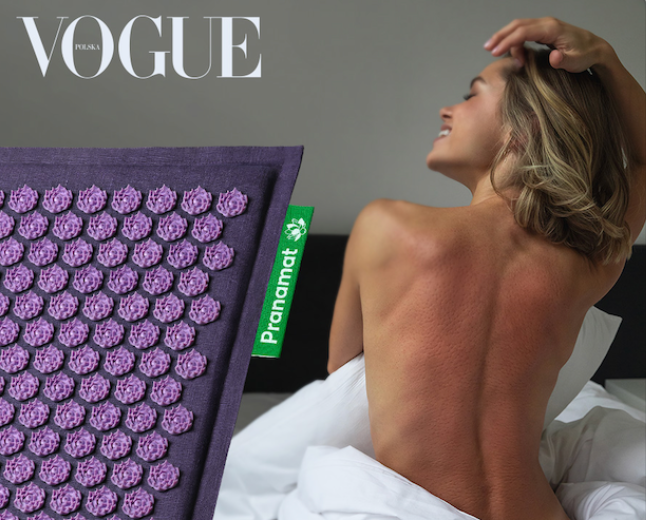
Boosting Libido with Pranamat: High Pelvic Blood Flow and Massive Endorphin Release
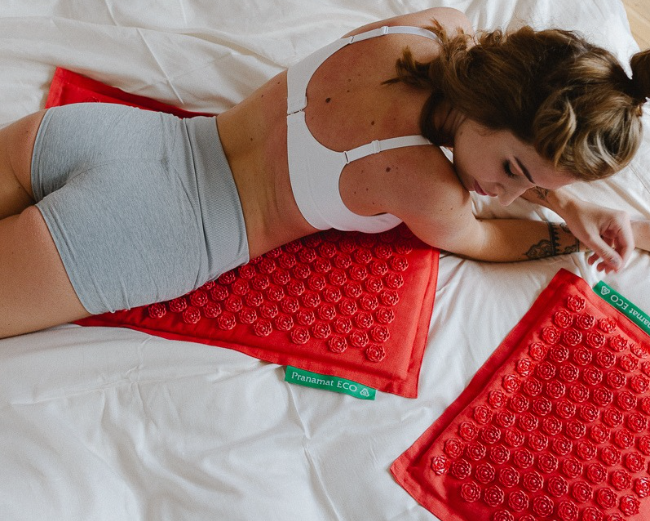
The specific acupressure mat libido application that the user community and clinical reasoning converge on most consistently is the use of the Pranamat with the lotus-spike surface positioned to contact the lower abdomen. Lying face-down on the full Pranamat Mat with the lower stomach and pelvic region in contact with the lotus spikes creates a powerful local microcirculatory response in the pelvic basin — precisely the territory where increased blood flow most directly supports reproductive tissue health and somatic nervous system arousal.
Within the first five minutes of this position, the lotus spikes engage the cutaneous nervous system of the lower abdominal surface, triggering arteriolar dilation through the local axon reflex. Blood flow to the pelvic tissue increases measurably. The warmth that users characteristically report spreading through the lower abdomen and pelvic region during mat use is the perceptual signal of this increased microvascular perfusion.
Simultaneously, the whole-body lotus spike stimulation triggers the massive systemic beta-endorphin release that is the most physiologically significant mechanism in the acupressure mat libido equation. Physical touch therapies stimulate massive releases of beta-endorphins, which act to reduce physical apathy and improve arousal — and this effect is not limited to the local application area but is systemic. The entire body shifts neurochemically, moving from the heavy, apathetic state of cortisol dominance toward the sensory aliveness and physical ease that are the somatic preconditions of genuine desire.
Users who use the Pranamat face-down for 15 to 20 minutes in the evening report a consistent and predictable experience: initial intense sensory input across the lower abdomen, followed by a progressive warmth and physical ease that spreads upward and outward, followed by a state of somatic aliveness and relaxed physical openness that is qualitatively distinct from the physical heaviness that preceded the session. The physiological cascade producing this experience is exactly what the science of pelvic blood flow enhancement, beta-endorphin release, and parasympathetic activation would predict.
For those seeking to boost libido naturally through consistent practice rather than pharmaceutical intervention, a nightly 15 to 20-minute Pranamat session incorporating the face-down lower abdominal position represents one of the most physiologically coherent, evidence-supported analog interventions available. Its mechanisms address the root physiological barriers to desire — cortisol, poor pelvic blood flow, sympathetic overdrive, and physical apathy — rather than masking their symptoms. This makes Pranamat an exceptional gift for your partner.
Building a Consistent Practice for Libido Support
The most meaningful results from acupressure mat use for libido support develop over four to eight weeks of consistent practice. This timeline reflects the cumulative nature of the physiological changes involved: progressive reduction in baseline cortisol, gradual improvement in pelvic microvascular health, and the sustained neurochemical adaptation that consistent beta-endorphin production produces in the brain's endogenous reward and arousal circuitry.
A practical protocol begins with five to ten minutes of supine use, allowing the full posterior chain parasympathetic response to establish, followed by fifteen minutes in the face-down position targeting the lower abdomen. This sequence — parasympathetic initiation followed by targeted pelvic stimulation — produces the most comprehensive physiological response across both the systemic and local mechanisms relevant to somatic nervous system arousal.
Consistency matters more than session duration. A daily 15-minute practice produces measurably superior cumulative results to an occasional 40-minute session, because the cortisol-reducing and microcirculatory benefits of regular acupressure compound over consistent daily activation rather than accumulating in isolated bursts.
FAQ: Acupressure Mat Libido
Can an acupressure mat genuinely affect libido?
Yes — through physiologically coherent mechanisms rather than novelty or placebo. Acupressure mat use reduces cortisol, triggers beta-endorphin release, increases pelvic microcirculation, and drives a systemic parasympathetic shift. Each of these effects directly addresses one of the primary physiological barriers to sexual desire in chronically stressed adults.
What is somatic nervous system arousal?
Somatic nervous system arousal refers to the activation of the body's physical sensory network in ways that create a state of heightened physical aliveness, sensory availability, and reduced bodily tension. It is the physiological substrate of desire — the state in which the body is present, warm, and open rather than contracted, heavy, and defended. It is achieved through physical rather than psychological stimulation.
Which Pranamat position is best for libido support?
The face-down position, with the lower abdomen and pelvic region in contact with the lotus-spike surface, produces the most direct pelvic microcirculatory response. Beginning with supine use for five to ten minutes to establish the full parasympathetic response before transitioning to the face-down position creates the most comprehensive physiological sequence for somatic nervous system arousal and libido support.
How long does it take to see results from acupressure mat use for libido?
Most users who practice consistently report noticeable improvements in physical ease, sensory aliveness, and desire within two to four weeks. The full cumulative benefit — including measurable reductions in cortisol, improved pelvic microvascular health, and sustained neurochemical adaptation — typically develops over four to eight weeks of daily practice.
Is there clinical evidence for acupressure and libido?
The clinical evidence base for acupressure's effects on libido draws from research on cortisol reduction, beta-endorphin release, pelvic blood flow, and the reproductive effects of specific meridian stimulation including SP-6 and Ren 6. Direct clinical trials on acupressure mat use and libido specifically are an emerging area, but the physiological mechanisms are well-characterized in the broader acupressure and reproductive health literature.
Conclusion
The acupressure mat libido connection is not a fringe wellness claim but a physiologically grounded consequence of mechanisms that are well-established in clinical science. By addressing the three primary physiological barriers to desire — chronic cortisol elevation, poor pelvic blood flow, and the physical apathy of sustained sympathetic overdrive — regular Pranamat use creates the somatic conditions under which libido naturally re-emerges.
For those seeking to boost libido naturally through consistent, evidence-based somatic practice rather than pharmaceutical intervention, the Pranamat represents one of the most comprehensive and physiologically coherent tools available. The Reddit users who discovered this effect were not imagining it. They were experiencing the body returning to a state it was always designed to inhabit — alive, circulated, endorphin-rich, and genuinely at ease in itself.