





 coupon
  Gift card


Gifts for Better Sleep: Top Products for Insomnia Relief
Introduction: The Epidemic of Poor Sleep and "Tired but Wired" Syndrome
Modern insomnia has a paradox at its center. An enormous proportion of people who struggle to sleep are not short of exhaustion — they are, in fact, profoundly tired. They feel the physical weight of fatigue throughout the day. They struggle to maintain focus and emotional regulation. They count the hours until they can be horizontal. And then they lie down, and their minds will not stop.
This is the “tired but wired” syndrome that characterizes a significant and growing proportion of the sleep-disrupted population. The body is exhausted. The nervous system is not. It is still running at alert — still processing the day’s emotional residue, still scanning for threats, still manufacturing cortisol that the body does not need and cannot use. Sleep, for these individuals, is not prevented by insufficient tiredness. It is prevented by insufficient nervous system relaxation.
Poor sleep doesn’t just affect nightly rest; it can undermine overall health and diminish quality of life, impacting everything from mood to immune function. Understanding and improving sleep quality is essential for supporting both physical and mental well-being.
Gifts for better sleep that genuinely address this syndrome must go beyond blocking light and creating darkness. They must support the physiological transition that sleep requires: the shift of the autonomic nervous system from its sympathetic alert state — where insomnia lives — into its parasympathetic rest state — where sleep becomes possible. This practical guide presents the best sleep gifts and solutions for insomnia relief, each selected for its ability to support this neurological transition through evidence-based mechanisms and make a real difference in everyday life.
The Neurology of Sleep: Why the Mind Won't Switch Off
The Sympathetic State and Sleep Incompatibility
Sleep optimization requires shifting the nervous system from a sympathetic (alert) to a parasympathetic (relaxed) state. This is not merely a preference — it is a biological requirement. The sympathetic nervous system and sleep are physiologically incompatible. The neural architecture of the sympathetic state — elevated norepinephrine, active HPA axis, heightened amygdala activity — is the architecture of wakefulness. Until the nervous system transitions out of this state, sleep onset is physiologically prevented regardless of how tired the person feels.
The body requires physical safety signals to quiet racing thoughts at night. This is a crucial insight for anyone selecting insomnia relief gifts: the nervous system does not respond to cognitive instructions to relax. Telling a person with an activated sympathetic nervous system to stop thinking and go to sleep is physiologically equivalent to telling someone in the middle of a sprint to stop breathing hard. The nervous system needs physical signals — tactile, thermal, olfactory, proprioceptive — that communicate safety and stillness to the subcortical brain structures that maintain sympathetic activation.
Cortisol Timing and Sleep Architecture
Cortisol follows a circadian rhythm that normally peaks in the early morning and reaches its daily nadir around midnight. Chronic stress disrupts this rhythm, elevating evening cortisol to levels that are incompatible with the melatonin onset that signals sleep. The "tired but wired" syndrome often reflects a cortisol curve that has been chronically shifted by sustained stress exposure — maintaining alerting cortisol at precisely the hours when melatonin should be rising.
Gifts for better sleep that address this disrupted cortisol curve — through parasympathetic activation, consistent pre-sleep rituals, or cortisol-modulating botanicals — address the actual neurochemical barrier to sleep rather than its downstream consequences.
Sleep Architecture and Why All Hours Are Not Equal
Sleep quality is not simply a function of total time in bed. The architecture of sleep — the cycling between N1, N2, N3 (deep slow-wave sleep), and REM stages — determines the restorative value of any given night of rest. To truly benefit from restorative sleep, it is crucial not only to fall asleep but also to stay asleep and stay asleep longer, allowing the body to progress through uninterrupted sleep cycles. Deep slow-wave sleep is the phase during which growth hormone secretion peaks, cellular repair is most active, immune consolidation occurs, and the glymphatic system flushes inflammatory debris from neural tissue. REM sleep supports emotional processing and memory consolidation. Insomnia that specifically reduces time in these critical stages — even when total sleep time appears adequate — produces the cognitive and physical symptoms of sleep deprivation.
Insomnia relief gifts that improve sleep architecture — not just sleep duration — produce qualitatively different morning experiences than those that simply extend time in lighter sleep stages.

Top Products for Insomnia Relief
Light Therapy and Circadian Regulation
The circadian rhythm — the body’s master clock that regulates sleep timing through light exposure — is exquisitely sensitive to light wavelength and intensity. Morning exposure to full-spectrum light at high lux levels (10,000 lux for 20–30 minutes) advances the circadian phase, producing earlier melatonin onset in the evening and naturally earlier sleep readiness. Premium light therapy lamps designed for morning use represent among the most mechanistically well-supported gifts for better sleep on the market, and are especially valuable during the winter months when natural sunlight is limited. A night light can also be a thoughtful addition, providing gentle illumination for bedtime routines or late-night trips without disrupting sleep.
Conversely, blocking blue-wavelength light in the two hours before sleep prevents the melatonin suppression that screen exposure produces, allowing the natural melatonin rise that facilitates sleep onset. Blue-light blocking glasses in this category have moved from fringe biohacking accessory to mainstream insomnia relief gift, with a growing evidence base supporting their effectiveness in advancing sleep onset timing.
Temperature Regulation for Sleep
Core body temperature must fall by approximately 1–2°C to enable the physiological transition into deep sleep. Premium sleep environment tools that support this temperature drop — cooling mattress toppers, breathable bamboo or Tencel bedding systems, and bedside fans with precision temperature control — are especially beneficial for hot sleepers. These products help keep you cool and comfortable throughout the night, addressing one of the most common and most overlooked physical barriers to sleep quality in the modern overheated bedroom environment.
The relationship between temperature and sleep depth is bidirectional: cooler sleep environments not only facilitate faster sleep onset but produce measurably deeper N3 sleep, more stable sleep architecture, and earlier REM onset compared with sleep in warm environments.
Nervous System Relaxation Tools
The category of nervous system relaxation gifts for better sleep is the most physiologically consequential for individuals with the “tired but wired” presentation, because it addresses the autonomic nervous system barrier to sleep directly. Tools in this category work by activating the physical safety signals that communicate to the subcortical brain that alert vigilance is no longer required.
Weighted blankets, which apply distributed deep-touch pressure, are among the most evidence-backed tools in this category. These blankets provide gentle pressure across the whole body, creating a calming, hugging sensation that is especially soothing for side sleepers. Their mechanism — tactile stimulation of the cutaneous mechanoreceptor network that promotes serotonin synthesis and parasympathetic down-regulation — is well-characterized and their clinical data is substantive. Weighted blankets are designed to provide deep touch pressure stimulation, which can help reduce anxiety and improve sleep quality by mimicking the feeling of being hugged. The soft texture of these blankets enhances comfort and relaxation, making them ideal for anyone seeking a cozy sleep environment. The Bearaby Cotton Napper, in particular, is a popular choice known for its breathability, gentle pressure, and suitability for side sleepers, offering both comfort and effective nervous system relaxation. For individuals whose primary barrier to sleep is an overactive sympathetic nervous system, the physical grounding of a quality weighted blanket provides exactly the safety-signal stimulation their nervous systems require.
Botanical and Nutritional Sleep Support
Several botanical and nutritional compounds have meaningful, evidence-based effects on the specific neurochemical barriers to sleep. Magnesium glycinate addresses the GABA-mediated inhibitory neurotransmission that chronic stress depletes. Ashwagandha’s withanolide compounds measurably reduce cortisol and improve sleep quality in double-blind clinical trials. L-theanine promotes alpha brain wave activity that facilitates the relaxed alertness that serves as the transition state between wakefulness and sleep. Herbal tea sets featuring caffeine-free teas like chamomile or valerian root are also helpful for promoting calm and relaxation, with many users finding them helpful for winding down before bed. Premium formulations combining these compounds in evidence-based doses represent genuinely impactful insomnia relief gifts.
Sound Environment Optimization
White noise machines and noise machines are especially beneficial for light sleepers and those who have trouble sleeping due to loud or disruptive noises. These devices help block out unwanted sounds, creating a calming environment that not only improves focus but also promotes deeper rest. Many white noise machines produce real-world sounds, such as fan noises, rather than digital static, which can be more soothing for users. Using a white noise machine regularly can help individuals stay asleep longer and feel more refreshed in the morning, making it a practical gift for anyone who has trouble with external noise. For those seeking an alternative, loop earplugs offer stylish, reusable noise reduction that is comfortable for overnight use and effective at minimizing disturbances.
Pink noise and certain rain frequency recordings have demonstrated meaningful effects on sleep quality in clinical studies, specifically increasing the amplitude of slow oscillations in N3 sleep and improving associated memory consolidation. Premium sound masking systems that generate consistent, room-filling acoustic environments also reduce the spike-and-recovery disruptions of environmental sounds that fragment lighter sleep stages throughout the night.
How Pranamat Helps: Pre-Sleep Nervous System Reset
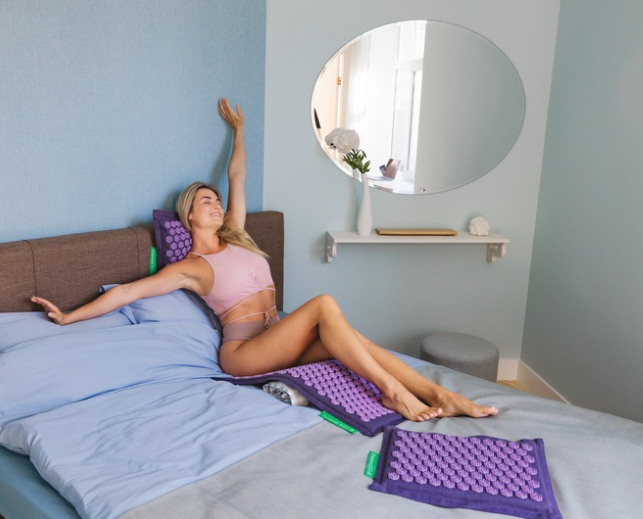
The Pranamat stands at the center of this gift guide because it addresses the most fundamental barrier to sleep for the tired-but-wired population: the sympathetic to parasympathetic shift that physiologically enables sleep onset. By helping users create a calming, sleep-ready environment, the Pranamat actively supports the transition from alertness to relaxation.
Used as a 20-minute pre-sleep ritual — replacing the final scroll through a smartphone, the last episode of a television series, or the anxious replaying of the day’s events — a Pranamat session initiates the physiological transition that sleep requires. The lotus-spike stimulation engages the entire cutaneous nervous system simultaneously, providing the physical safety signals that the subcortical brain needs to release its alert-state maintenance. Heart rate decreases measurably. Cortisol begins to fall. The muscle tension that has been held since morning begins, finally, to soften.
The beta-endorphin release triggered by the lotus spikes adds a neurochemical dimension to this physiological transition: endorphins not only provide pain relief and mood elevation but promote the drowsiness and physical ease that characterizes the hypnagogic state — the liminal zone between wakefulness and sleep that chronically stressed individuals struggle to reach.
The clinical data supporting the Pranamat as a pre-sleep nervous system reset is among the most specific and most compelling in the gifts for better sleep category. Clinical studies demonstrate that targeted tactile acupressure results in a 95% improvement in sleep quality. More specifically: 100% of clinical trial participants fell asleep faster with regular Pranamat use, and 95% reported better sleep quality over the 30-day trial period. These are not marginal improvements in subjective sleep satisfaction — they reflect genuine, measurable changes in sleep architecture and sleep onset latency produced by the cumulative daily practice of pre-sleep parasympathetic activation.
For the person who has tried melatonin and found it inadequate, who has experimented with white noise and found it insufficient, and who genuinely does not understand why they cannot sleep when they are so obviously exhausted — the Pranamat provides the answer their nervous system has been waiting for. The problem is not the absence of tiredness. It is the presence of a sympathetic state that no supplement, no darkness, and no breathing exercise has quite managed to dismantle. Twenty minutes on the lotus-spike surface does what they cannot.
FAQ: Gifts for Better Sleep
What are the best gifts for better sleep for someone with chronic insomnia?
The best gifts for better sleep for chronic insomnia sufferers are those that address the sympathetic nervous system barrier to sleep rather than its downstream symptoms. Acupressure mats that produce the sympathetic to parasympathetic shift, weighted blankets that provide deep-touch safety signals, and circadian light therapy that regulates cortisol timing all address the physiological mechanisms of insomnia directly.
How does a sympathetic to parasympathetic shift help with sleep?
The sympathetic nervous system is the architecture of wakefulness and alert vigilance. Sleep is physiologically incompatible with sustained sympathetic activation. The sympathetic to parasympathetic shift — achieved through physical safety signals including tactile pressure, warmth, and rhythmic stimulation — creates the neurological conditions under which melatonin rises naturally, cortisol falls, and sleep onset becomes physiologically possible regardless of how busy the mind feels.
What does nervous system relaxation have to do with insomnia relief?
Most clinical insomnia that is not explained by sleep apnea or circadian phase disorder is, at its core, a nervous system regulation problem. The inability to stop thinking at bedtime, the "tired but wired" experience, and the anxiety about sleep that becomes self-reinforcing all reflect a sympathetic nervous system that has not received the physical safety signals required to relinquish its alert state. Nervous system relaxation tools that provide those signals address the actual mechanism of the insomnia.
How quickly does acupressure improve sleep quality?
Most users notice improvements in sleep onset and morning energy within the first week of consistent pre-sleep acupressure use. Clinical data shows that 100% of participants fell asleep faster and 95% reported improved sleep quality within a 30-day trial period, reflecting both immediate session effects and the cumulative neurological adaptation that daily parasympathetic activation produces over time.
Are there gifts for better sleep that don't involve medication?
Yes — the entire guide is focused on non-pharmacological insomnia relief gifts. Acupressure mats, weighted blankets, circadian light therapy, temperature regulation systems, and botanical supplements all produce meaningful improvements in sleep quality through physiological mechanisms that do not carry the dependency risk, next-day grogginess, or sleep architecture disruption that pharmaceutical sleep aids can produce.
Conclusion
The gifts for better sleep that make a genuine difference are not those that make sleep more comfortable once it arrives — they are those that remove the physiological barriers that prevent it from arriving in the first place. For the significant proportion of the population whose insomnia is rooted in an overactivated sympathetic nervous system that cannot receive the physical safety signals it needs to stand down, the Pranamat represents one of the most effective and most evidence-backed insomnia relief gifts available.
100% of clinical participants fell asleep faster. 95% slept better. These are not aspirational claims — they are the measured outcomes of daily pre-sleep nervous system resets performed by real people whose nervous systems responded to physical safety signals the way every overactivated nervous system eventually must, when given what it needs.