





 coupon
  Gift card


Bedtime Acupressure: How 15 Minutes on a Mat Can Support Deep Sleep Quality and Better REM Sleep
There’s a familiar moment that happens just before sleep.
Your body feels tired—heavy, even. But your mind is still moving. Thoughts loop. Muscles hold subtle tension. You lie there waiting for sleep to arrive, but something hasn’t quite switched off yet.
Understanding sleep, its stages, and its impact on health and well-being is essential for recognizing how to improve deep sleep quality and overall restorative processes.
This is the gap most people overlook.
Not the need for more sleep—but the need for a better transition into sleep, which is essential for achieving restorative sleep and quality sleep.
What if, instead of trying to fall asleep instantly, you gave your body 15 minutes to reset first?
That’s where bedtime acupressure comes in—a simple, physical ritual that may help shift your body out of tension and into a state more supportive of deeper sleep, including REM cycles. Acupressure mats can be a supportive tool for better sleep.

What REM Sleep Actually Does
When we talk about “good sleep,” we often mean how long we sleep. But what really matters is how we sleep.
Sleep is structured in cycles, known as sleep architecture, and one of the most important stages is REM (Rapid Eye Movement) sleep.
During REM sleep:
- The brain becomes highly active
- Dreams occur
- Emotional processing takes place
- Memory consolidation happens
Your heart rate, blood pressure, brain activity, and breathing increase.
This is where your mind organizes experiences, processes stress, and resets cognitively.
REM sleep plays a key role in muscle recovery, immune function, and brain health, all of which are essential for optimal health.
REM sleep typically makes up 20% to 25% of normal sleep for most adults, amounting to up to two hours per night.
According to the Sleep Foundation, REM sleep plays a critical role in:
- Emotional regulation
- Learning and memory
- Mental recovery
Why REM Sleep Gets Disrupted
REM sleep doesn’t just “happen.” It depends on:
- Smooth transitions between sleep stages
- A calm nervous system
- Minimal interruptions during the night
Sleep disturbances and sleep disorders, such as insomnia, can fragment REM sleep and reduce overall deep sleep quality. Addressing and treating sleep disorders is important for restoring healthy REM sleep patterns.
If your body is tense or your mind is overstimulated before bed, these transitions can become fragmented—affecting the quality and timing of REM sleep.
Why Your Body State Before Bed Matters
Sleep doesn’t begin when your head hits the pillow.
It begins in the state your body is in before you lie down.
Maintaining a consistent sleep schedule, including going to bed and waking up at the same time every day, helps regulate your circadian rhythm and significantly improves deep sleep quality.
The Nervous System Factor
Your body operates between two main modes:
- Sympathetic → alert, active, stressed
- Parasympathetic → calm, restorative, ready for sleep
If you go to bed while still in a sympathetic state:
- Your heart rate may remain elevated
- Muscles stay slightly contracted
- Your brain continues processing
This can delay sleep onset and disrupt sleep cycles.
A calm nervous system not only supports deep sleep quality but also helps regulate the immune system, promoting stronger immune responses and contributing to overall health.
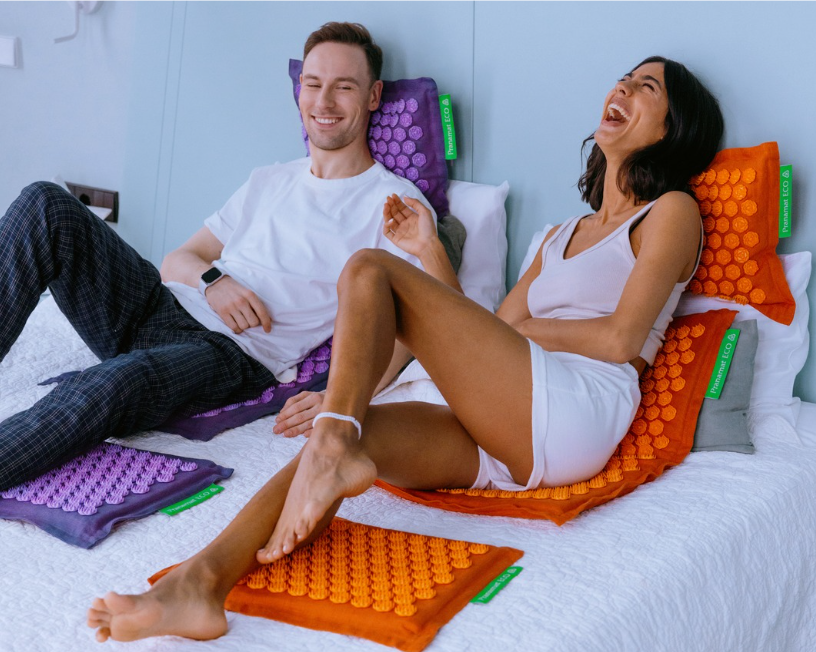
Physical Tension = Subtle Wakefulness
Even low-level muscle tension—especially in the back, shoulders, or neck—can keep your system partially activated.
This is why you can feel tired, but not fully relaxed.
And it’s why addressing the body directly can be so effective.
Physical tension and pain, such as back or neck pain, can interfere with sleep onset and deep sleep quality, so addressing pain is important for achieving restful sleep.
The Role of Physical Relaxation Before Sleep
Most sleep strategies focus on the mind: meditation, breathing, limiting screens.
But there’s another pathway:
Body → Brain
This is where somatic sleep support comes in.
Acupressure mats are a popular somatic tool designed to stimulate pressure points across the body. Acupressure mats work by stimulating these pressure points, which can help calm the nervous system, relax muscles, and reduce stress. By stimulating pressure points, acupressure mats promote relaxation and may enhance deep sleep quality.

What Happens During 15 Minutes of Acupressure
At first glance, lying on an acupressure mat may seem simple. Most acupressure mats are designed with small plastic spikes that stimulate the skin and pressure points, activating the nervous system and promoting relaxation.
The concept of acupressure mats is rooted in traditional Chinese medicine, which focuses on stimulating energy flow (qi) through meridian points to encourage relaxation and improve sleep quality. Acupressure mats may also help decrease pain, making it easier for individuals who suffer from pain to achieve better sleep.
But the experience is surprisingly dynamic.
The Sensory Phase (First Few Minutes)
When you first lie down:
- Hundreds of small points stimulate the skin
- The sensation can feel intense or prickly, especially during just a few minutes at the start of the session
- Your attention shifts to the body
This shift alone can interrupt mental loops.
The Adaptation Phase
After a few minutes:
- The initial intensity softens
- Warmth begins to spread
- Breathing naturally slows
As the body adapts, blood circulation improves and endorphins are released, which can enhance relaxation and support better sleep.
This is often when the body starts to relax more deeply.
The Release Phase
Toward the end of the session:
- Muscles feel looser
- The body feels heavier
- A sense of calm becomes more noticeable
Some people describe this as a “melting” feeling—where tension gradually dissolves.
After this release phase, many users report that they can finally drift into deep sleep more easily, especially if they have been feeling restless or mentally alert.
What’s Happening Physiologically
This experience may involve:
- Increased circulation
- Activation of sensory pathways
- A shift toward parasympathetic dominance
These physiological changes promote relaxation and provide stress relief, helping to calm the nervous system, relax muscles, and prepare the body for deep sleep quality. Using an acupressure mat can further enhance these effects by reducing stress and tension, which may improve overall sleep quality.
Together, these changes help prepare the body for rest.

Acupressure and Sleep Architecture
So how does this relate to REM sleep?
It comes down to transitions.
Sleep quality depends on the smooth progression through all sleep stages, including deep sleep and other stages, as each plays a vital role in restorative processes and overall well-being.
Most adults experience four to six sleep cycles per night, with each cycle lasting about 80 to 100 minutes. Tracking sleep patterns can help assess deep sleep quality and provide insights into how well your body moves through these essential stages.
Smoother Entry Into Sleep
When your body is already relaxed:
- You may fall asleep more easily
- The transition from wakefulness to sleep becomes smoother
Physical relaxation can help you feel sleepy and make it easier to fall asleep. Regular physical activity also helps you fall asleep faster and increases deep sleep.
Reduced Fragmentation
Physical relaxation may help reduce:
- Micro-awakenings
- Restlessness during the night
This supports more continuous sleep cycles. Reducing sleep disturbances in this way promotes more restful sleep, allowing you to experience all sleep stages—including deep sleep and REM sleep—for better refreshment and alertness in the morning.
Supporting REM Timing
REM sleep typically occurs later in sleep cycles, with most REM sleep occurring toward the end of the night. The time spent in REM can vary depending on overall sleep quality and duration.
When early sleep stages are more stable, REM cycles may occur more naturally. If you miss out on REM sleep, your body will compensate with REM rebound, increasing the time spent in REM during subsequent nights to restore balance.
Acupressure doesn’t directly “increase REM”—but it may support the conditions that allow REM sleep to unfold more effectively.

The Pranamat Bedtime Ritual
One of the simplest ways to incorporate acupressure into your routine is through a consistent pre-sleep ritual.
Pranamat is designed for exactly this purpose.
Why It Works as a Ritual
- It provides intense sensory input
- It shifts focus away from mental activity
- It creates a clear transition between day and night
Rather than going straight from stimulation to sleep, it acts as a buffer zone.
This ritual leverages brain basics by engaging fundamental brain mechanisms that promote relaxation and prepare the mind for deep sleep.
How to Use It
- Lie on the mat for 15–20 minutes before bed
- Use low lighting and a quiet environment
- Focus on slow, natural breathing
This prepares the body before you even get into bed. Optimizing your pre-sleep routine can improve total sleep duration and support healthy non-rapid eye movement (non-REM) sleep stages, which are essential for deep sleep quality.
What It Feels Like: From Tension to Release
Before:
- Shoulders slightly raised
- Jaw subtly clenched
- Mind still active
During:
- A sharp, tingling sensation
- Gradual warmth spreading
- Breathing slowing without effort
After:
- Muscles feel softer
- Body feels heavier
- Mind feels quieter
You may wake up feeling refreshed and alert, which is a sign of restorative sleep and good deep sleep quality.
This contrast is often what makes the practice feel so effective.
It’s not just relaxation—it’s a noticeable shift.
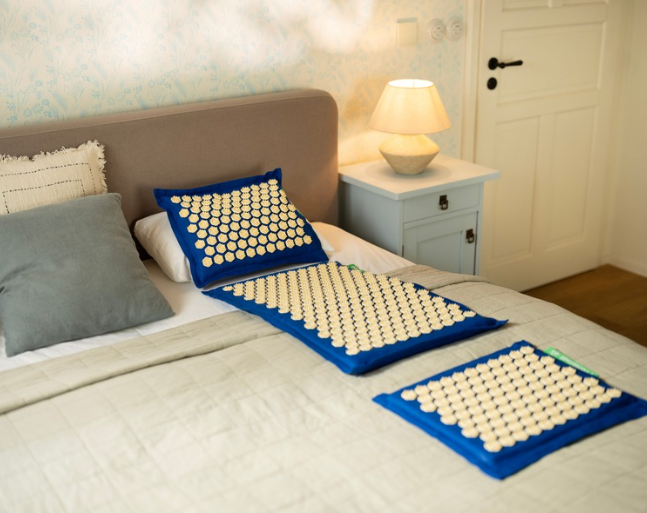
A Simple 15-Minute Pre-Sleep Routine
Here’s how to turn this into a practical habit:
1. Set the Environment
- Dim lights
- No screens
- Quiet space
2. Lie on the Mat (15 Minutes)
- Stay still
- Focus on breathing
- Let the sensation evolve
3. Transition Directly to Bed
- Avoid stimulating activities
- Keep the environment calm
4. Stay Consistent
Like any sleep strategy, consistency matters more than intensity.
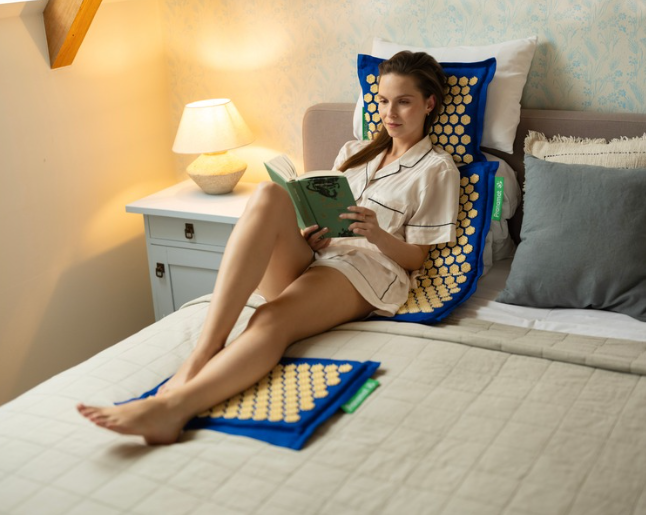
FAQ
Does acupressure improve REM sleep?
Acupressure doesn’t directly target REM sleep, but it may support the conditions—like relaxation and stable sleep transitions—that allow REM cycles to occur more naturally.
How long should I use acupressure before bed?
Around 15–20 minutes is often enough to experience the relaxation benefits.
Can physical relaxation help me fall asleep faster?
Yes. Reducing muscle tension and calming the nervous system can make it easier to transition into sleep.
Is 15 minutes enough?
For many people, yes. Even short, consistent sessions can create noticeable changes over time.
Conclusion
Sleep isn’t just something that happens when you lie down.
It’s something your body prepares for.
And often, the missing piece isn’t more effort—it’s a better transition.
A simple 15-minute acupressure session can act as that bridge:
- From tension to release
- From activity to rest
- From thinking to feeling
It won’t force sleep.
But it can make sleep easier to enter—and deeper once you’re there.
And sometimes, that’s all your body needs.