





 coupon
  Gift card


Back Pain and Sleep: The Vicious Cycle of Can't Sleep Because of Back Pain Explained
You finally get into bed after a long day, hoping for relief—only to find yourself shifting positions every few minutes. Your lower back tightens when you lie flat, and for many people with back pain, lying flat can actually worsen discomfort by putting extra strain on the spine. In these cases, sleeping in a reclined position—such as in a recliner or with an adjustable bed—may help reduce strain and provide better support. Your shoulders ache when you turn. Minutes stretch into hours, and sleep feels just out of reach.
If this sounds familiar, you’re not alone. The relationship between back pain and sleep is one of the most frustrating—and misunderstood—cycles in musculoskeletal health. Pain keeps you awake, and poor sleep makes pain worse. Night after night, the loop reinforces itself.
Understanding why this happens is the first step toward breaking it. The good news: with the right approach, it’s possible to interrupt the cycle and move toward more restorative sleep, improving not just your nights but your overall quality of life.

The Vicious Cycle: Back Pain and Sleep
At its core, the connection between back pain causing insomnia is a feedback loop:
Pain makes it difficult to fall asleep and stay asleep
Sleep deprivation increases pain sensitivity
Heightened pain makes the next night even worse
Research shows that poor sleep quality and chronic sleep deprivation are associated with increased risk of developing chronic back pain and related health issues. Research published on PubMed has shown that sleep disruption lowers pain thresholds—meaning the same level of physical strain feels more intense after a poor night’s rest. Meanwhile, institutions like Mayo Clinic emphasize that chronic pain conditions are strongly linked to insomnia.
This creates a classic pain-sleep cycle:
Pain → Poor sleep → Increased inflammation → More pain
Chronic sleep deprivation has also been linked to an increased risk of developing chronic illnesses.
Over time, this loop doesn’t just affect your nights—it can impact your mood, energy levels, and physical recovery during the day.
Why Back Pain Disrupts Deep Sleep
Not all sleep is equal. Your body cycles through different stages, but deep sleep (also called slow-wave sleep) is where the most critical physical recovery happens.
During deep sleep, the body:
- Repairs muscle tissue
- Reduces inflammation
- Regulates hormones linked to stress and recovery
When you’re dealing with back pain, your body struggles to reach or stay in this restorative stage. Sleep problems are common among those with back pain, and approximately 50-60% of people with low back pain report significant sleep disturbances.
Pain Signals Keep the Brain Alert
Pain isn’t just physical—it’s neurological. Persistent discomfort sends continuous signals to the brain, activating a low-level stress response. This leads to:
- Nervous system activation (especially the sympathetic “fight or flight” response)
- Frequent micro-awakenings
- Reduced time spent in deep sleep
Pain can also cause frequent waking during the night, further disrupting sleep cycles and making it harder to achieve restorative rest.
Even if you technically “sleep,” the quality is compromised. You wake up feeling unrefreshed—and your body hasn’t fully repaired itself.

The Biomechanics Behind Nighttime Pain
To understand how to sleep with back pain, it helps to look at what’s happening physically when you lie down. Various factors, such as spine alignment, mattress support, and sleep position, can contribute to nighttime back pain.
Muscle Tension and Inflammation
Throughout the day, your muscles accumulate strain—especially if you sit for long periods or engage in repetitive movements.
By bedtime, this can show up as:
- Tight lower back muscles
- Stiffness along the spine
- Localized inflammation
Instead of relaxing, your body holds onto muscle tension, creating a constant, low-level discomfort that prevents full relaxation.
Inflammation compounds the issue. According to Spine Health, inflamed tissues can become more sensitive to pressure, making even a comfortable mattress feel inadequate.
Spinal Alignment and Pressure
Your spine is designed to maintain a natural curve. Maintaining a neutral spine, especially in the lumbar spine and chest areas, is important for preventing back pain during sleep and keeping the spine aligned. When your sleeping position disrupts that alignment, it creates uneven pressure.
Common issues include:
- Sleeping on a too-soft mattress that lets the hips sink and fails to provide adequate lumbar support
- Using a pillow that tilts the neck unnaturally or does not help achieve a neutral spine—stomach sleepers usually prefer a thin pillow to avoid neck contortion
- Twisting the spine in side-sleeping positions without proper support, such as a small pillow under the knees or lower back to help maintain spinal alignment
A supportive pillow is essential for maintaining proper alignment of the spine during sleep.
This leads to:
- Increased pressure points
- Strain on ligaments and discs
- Reduced blood flow to certain areas
The result? More discomfort—and more tossing and turning.
Why Sleep Is Essential for Pain Recovery
If pain disrupts sleep, it’s equally true that sleep is essential for reducing pain. Good sleep habits can help manage pain and support mental health by improving sleep quality, reducing stress, and promoting overall well-being. Sleep is also an important time for your spine — and your entire body — to relax and rejuvenate.
During high-quality sleep, the body performs critical functions:
1. Tissue Repair and Regeneration
Damaged muscle fibers rebuild, and micro-tears from daily activity are repaired.
2. Reduction of Inflammation
Sleep helps regulate inflammatory markers, reducing swelling and sensitivity.
3. Nervous System Reset
The body shifts into a parasympathetic (“rest and digest”) state, calming pain perception and stress responses.
Without sufficient deep sleep, these processes are incomplete. This is why pain relief for better sleep isn’t just about comfort—it’s about enabling recovery at a physiological level.
How to Sleep with Back Pain: Practical Strategies
Breaking the cycle requires addressing both sleep quality and physical strain. Here are practical tips to help improve your sleep quality and alleviate back pain:
A consistent sleep routine can help regulate your body clock and improve sleep quality, which is important for managing pain.
Optimize Your Sleeping Position
- Best sleep position: The best sleep position for spinal health and pain relief is one that maintains a neutral spine and proper sleep posture. Studies show that certain sleep positions can put mechanical stress on the neck and back, leading to pain.
- On your back: Place a pillow or a rolled up towel under your knees to reduce lower back strain and provide extra support. Keep in mind that sleeping on your back puts approximately 50 pounds of pressure on your spine, so proper support is essential for a restful night's sleep.
- On your side: Side sleepers should use a pillow between their knees to keep hips aligned and maintain a neutral spine. Sleeping on your side, especially in a relaxed fetal position, can help alleviate back pain and open up space between vertebrae, which is beneficial for those with herniated discs. Hugging a pillow or using extra support can further improve comfort and spinal alignment.
- Back sleepers: Back sleepers benefit from a supportive pillow under the knees and a medium-firm mattress to optimize spinal alignment and reduce pressure.
- Stomach sleeping: Avoid stomach sleeping, as it puts the most pressure on your spine and can cause neck and upper back pain. If you must sleep on your stomach, place a rolled up towel or thin pillow under your stomach for extra support to help maintain a neutral spine.
- Sleep posture: Good sleep posture is crucial for spinal alignment and overall sleep quality. Effectively managing back pain during sleep involves maintaining neutral spinal alignment through optimized sleep positions, proper pillow support, and a medium-firm mattress.
- Log-roll technique: Use the log-roll technique to get in and out of bed to avoid twisting your spine and reduce strain.
A restful night's sleep is important for pain management and overall well-being.
Improve Pillow Placement
Choosing the right pillow is crucial for proper support and spinal alignment. Your pillow should support your neck without pushing it forward or letting it drop back. The goal is neutral alignment from head to spine. Using the wrong pillow can contribute to neck pain and discomfort. A supportive pillow is essential to prevent both neck and back pain during sleep.
Reduce Pressure on the Spine
Choose a supportive mattress that helps maintain your spine’s natural alignment. A firmer mattress or a medium-firm mattress can provide the right balance of comfort and support, helping to keep your spine aligned and reduce back pain. A firm or medium-firm mattress also distributes pressure from your body more evenly, which is crucial for relieving back pain and promoting ergonomic sleep support. While a soft mattress may feel comfortable at first, it often lacks enough support for adult-sized individuals throughout the night. Test different firmness levels to find the right balance for your back, as personal preference and body type can affect what feels best. Remember to replace your mattress every seven to ten years, since mattresses soften over time and may no longer provide proper spinal alignment.
- Avoid overly soft or overly firm extremes
- Adjust positioning if you wake up stiff—your body is giving feedback
Create a Supportive Sleep Environment
Small environmental changes can improve sleep quality:
- Keep the room cool and dark
- Limit screen exposure before bed
- Establish a consistent sleep schedule
Getting enough sleep—ideally 7 to 9 hours each night—is crucial for pain management, tissue repair, and overall health. Even a single bad night's sleep can increase pain sensitivity and negatively affect spine health, though chronic issues are usually the root cause of back pain. Insufficient sleep can exacerbate pain and lead to other health problems, including impaired focus and an increased risk of cardiovascular disease.

The Missing Step: Pre-Sleep Muscle Preparation
Here’s where many people fall short: they focus only on how they lie down, not how their body feels before they do.
If your muscles are already tense and circulation is limited, even the perfect sleep position won’t fully solve the problem.
Think of it this way:
- You wouldn’t start a workout without warming up
- Sleep, similarly, benefits from preparation
Pre-sleep preparation can help alleviate pain and improve sleep quality. Techniques such as gentle stretching or applying heat before bed can relax tight muscles and make it easier to fall asleep. For example, applying a heating pad for 15-20 minutes before bed can help relax tight muscles and alleviate pain associated with back pain and sleep issues.
Pre-sleep preparation can help:
- Reduce muscle tension
- Improve circulation
- Signal the nervous system to shift into relaxation mode
This step is often overlooked—but it can make a meaningful difference in how quickly and deeply you fall asleep.
The Pranamat “Passive Physiotherapy” Approach
One way to support pre-sleep preparation is through gentle, passive techniques that encourage the body to relax before bed.
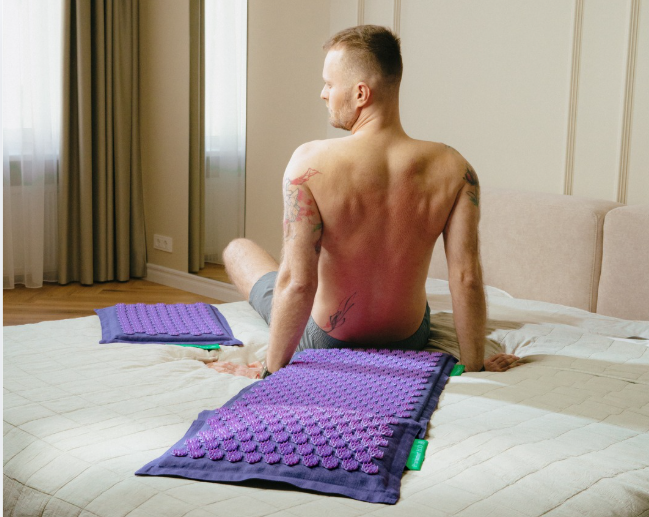
Pranamat mats are designed around acupressure stimulation—small, evenly distributed points that interact with the skin and underlying tissues when you lie on them.
This can be thought of as a form of passive physiotherapy, where the body responds naturally to physical input without active effort. In addition, physical therapy can play a key role in supporting recovery and maintaining proper spine alignment during sleep, especially when guided by a physical therapist. If you experience persistent back pain, consulting a healthcare provider can lead to personalized advice and potential treatments tailored to your needs.

How It May Help
- Microcirculation support: The stimulation may encourage blood flow, helping deliver oxygen and nutrients to tense areas
- Muscle relaxation: Gentle pressure can help reduce built-up tension in the back
- Nervous system calming: Acupressure may promote a shift toward parasympathetic activation
- Anxiety reduction: Anxiety, especially heightened during stressful times like the COVID-19 pandemic, can disrupt sleep and worsen back pain. Relaxation techniques such as acupressure may help address both anxiety and sleep-related back pain.
The goal isn’t to “treat” pain, but to prepare the body for rest—making it easier to transition into sleep.
A Simple Night Routine for Back Pain Relief
Consistency matters more than complexity. Here’s a realistic routine you can try:
A good night routine not only helps you fall asleep faster but also ensures you wake up in the morning feeling refreshed and ready to tackle the day. Restorative sleep is a key part of waking up ready to tackle the day without being bogged down by pain.
1. Wind Down (30–60 minutes before bed)
- Dim lights
- Avoid screens
- Try light stretching or breathing exercises
2. Physical Preparation (10–20 minutes)
- Lie on an acupressure mat like Pranamat
- Focus on slow, steady breathing
- Include gentle chest-opening stretches or breathing exercises to help relax the upper body before bed
- Allow muscles to gradually relax
3. Optimize Your Sleep Setup
- Adjust pillows and positioning
Consider using extra support, such as supportive pillows or a mattress topper, to enhance comfort and help maintain proper spinal alignment during sleep. These additions can provide the tailored support needed to alleviate back pain and promote a neutral spine. - Ensure spinal alignment
If you experience persistent back pain, an adjustable bed may help you find a comfortable sleep position and reduce strain on your back by allowing you to recline or elevate your legs as needed. - Keep your environment cool and quiet
4. Transition to Sleep
- Get into bed only when you feel relaxed
- Avoid overthinking—let your body settle naturally
Following these steps can help you achieve a restful night's sleep and support your spine health.
FAQ
Why does back pain feel worse at night?
At night, there are fewer distractions, so pain becomes more noticeable. Additionally, reduced movement can lead to stiffness, and inflammation may peak after a full day of physical activity.
How should I sleep if my lower back hurts?
Sleeping on your back with a pillow under your knees or on your side with a pillow between your knees can help maintain spinal alignment and reduce strain.
Can better sleep reduce back pain?
Yes. High-quality sleep supports recovery and repair, reduces inflammation, and lowers pain sensitivity—helping break the pain-sleep cycle over time.
What helps break the pain-sleep cycle?
A combination of:
- Proper sleep positioning
- Pre-sleep muscle relaxation
- Consistent sleep habits
- Addressing inflammation and tension
Holistic approaches tend to be more effective than focusing on a single factor.

Conclusion
The relationship between back pain and sleep isn’t just frustrating—it’s deeply interconnected. Pain disrupts sleep, and poor sleep amplifies pain, creating a loop that can feel difficult to escape.
But this cycle isn’t permanent.
By understanding what’s happening in your body—and addressing both the mechanical and neurological factors—you can begin to shift the pattern. Small, consistent changes in how you prepare for sleep, support your body, and manage tension can add up over time.
Better sleep doesn’t require perfection. It requires awareness, experimentation, and a willingness to support your body in the ways it needs most.