





 coupon
  Gift card


Natural Insomnia Remedies: Beyond Prescription Pills
It’s 2:13 a.m. You’ve been in bed for hours. Your body feels exhausted, but your mind is still racing—replaying conversations, planning tomorrow, worrying about things you can’t control. You’re tired, but somehow also alert.
This “wired but tired” feeling is one of the most frustrating aspects of insomnia. Insomnia is a common sleep disorder affecting millions of people and can significantly impact sleep quality and daily functioning.
If you’ve been searching for natural insomnia remedies or wondering how to treat insomnia without drugs, you’re not alone. While prescription medications can play an important role—especially in the short term—many people are prescribed sleeping pills by doctors as a common short-term solution for managing insomnia.
This guide offers a balanced, evidence-informed look at home remedies for insomnia and behavioral strategies that may help reduce sleep disruption over time. Non-pharmacological approaches can be especially helpful for addressing symptoms of insomnia such as difficulty falling asleep, frequent awakenings, and poor sleep quality. There’s no one-size-fits-all solution—but with the right combination of tools, better sleep is often possible.
.jpg)
What Is Chronic Insomnia?
Insomnia becomes chronic when sleep difficulties and insomnia symptoms, such as poor sleep quality, occur at least three nights per week for three months or longer.
It typically involves one or more of the following:
- Difficulty falling asleep (prolonged sleep latency)
- Frequent nighttime awakenings
- Waking too early and not being able to fall back asleep
- Non-restorative or poor-quality sleep
According to organizations like Sleep Foundation and Johns Hopkins Medicine, chronic insomnia doesn’t just affect nights—it spills into daytime life (https://www.sleepfoundation.org/sleep-aids/natural-sleep-aids)(https://www.hopkinsmedicine.org/health/wellness-and-prevention/natural-sleep-aids-home-remedies-to-help-you-sleep).
Common daytime effects:
- Fatigue and low energy
- Difficulty concentrating
- Irritability or mood changes
- Reduced performance at work or school
Chronic insomnia can also negatively impact overall health, including both mental and physical well-being.
Over time, insomnia can become a cycle: poor sleep leads to stress, and stress makes sleep harder.
Why Sleep Problems Persist
Understanding why insomnia continues is key to addressing insomnia effectively.
1. Nervous System Hyperarousal
At the core of many sleep issues is something called hyperarousal.
This means your body is stuck in a state of alertness—even when you’re trying to rest.
You may notice:
- A racing heart
- Tension in your body
- Persistent thoughts
- A sense of restlessness
According to Healthline, insomnia is often less about a lack of tiredness and more about an inability to downshift into a calm, sleep-ready state.
2. Stress, Habits, and Environment
Sleep is sensitive to lifestyle patterns.
Common contributors include:
- Irregular sleep schedules
- Late-night screen exposure
- High stress levels
- Caffeine or alcohol use
These lifestyle factors can directly affect sleep, either positively or negatively, by influencing your body's ability to relax and maintain healthy sleep patterns.
Even small disruptions can interfere with your body’s natural rhythms.

3. Learned Wakefulness
One of the lesser-known drivers of insomnia is conditioning.
If you regularly:
- Lie awake in bed
- Worry about sleep
- Use your bed for work or scrolling
Your brain can start associating your bed with wakefulness instead of sleep.
This learned pattern can persist even when the original cause of insomnia is gone.
Natural Insomnia Remedies
When exploring natural sleep aids for chronic insomnia, it helps to think in categories. Most effective approaches combine behavioral, cognitive, environmental, and physical strategies. In addition, herbal remedies and dietary supplements are also commonly explored natural insomnia remedies.
Behavioral Approaches
Behavioral sleep interventions, including improving sleep habits, are among the most researched and effective non-drug strategies.
1. Sleep Scheduling
Go to bed and wake up at the same time every day—even on weekends.
Why it helps:
- Regulates your internal clock
- Improves sleep consistency
- Reduces variability in sleep latency
Maintaining a consistent sleep schedule is a core aspect of good sleep hygiene, which helps promote better sleep quality and manage insomnia symptoms.
2. Stimulus Control
This technique retrains your brain to associate bed with sleep.
Basic rules:
- Go to bed only when sleepy
- Get out of bed if you can’t sleep after ~20 minutes
- Use the bed only for sleep (and intimacy)
3. Consistency Over Perfection
A single bad night won’t undo your progress—but inconsistent habits will.
Focus on:
- Repetition
- Predictability
- Gradual improvement
Cognitive Techniques
For many people, insomnia is driven by mental overactivity. Mindfulness meditation is a cognitive technique that can help manage racing thoughts and promote relaxation for better sleep.
Practicing mindfulness meditation, deep breathing, or progressive muscle relaxation can reduce anxiety and improve sleep quality. Mindfulness meditation, in particular, has been shown to help reduce stress, improve sleep quality, and support healthier sleep patterns.
1. Journaling
Before bed, write down:
- Worries
- Tasks for tomorrow
- Lingering thoughts
This process—sometimes called cognitive offloading—reduces mental clutter.
2. Mental Redirection
Instead of trying to “stop thinking,” gently redirect your focus.
Examples:
- Visualizing a calm place
- Repeating a neutral phrase
- Counting slowly
3. Reducing Sleep Pressure
Ironically, worrying about sleep makes it harder.
Shift from:
“I need to fall asleep now”
To:
“I’m giving my body the chance to rest”
This subtle change can reduce performance anxiety around sleep.
Environmental Optimization
Your surroundings can either support or disrupt sleep. Optimizing your environment is a key part of sleep hygiene, which involves establishing healthy routines and making adjustments to your bedroom and bedtime habits to promote restful sleep.
Here are some ways to create a sleep-friendly environment:
- Keep your bedroom cool, dark, and quiet.
- Use blackout curtains or an eye mask to block out light.
- Try a white noise machine or earplugs to reduce noise.
- Remove electronic devices from the bedroom.
Avoid screens before bed. Avoiding screens at least an hour before bed helps prevent blue light from disrupting circadian rhythms, and limiting screen time before bed can improve sleep quality.
Effective natural remedies for insomnia include improving sleep hygiene, limiting evening blue light, and practicing relaxation techniques.
Key factors:
Light
- Keep your bedroom dark
- Avoid screens before bed
- Get exposure to natural light during the day to help regulate your circadian rhythms and support healthy sleep
Temperature
- Aim for a cool environment (around 18–20°C / 64–68°F)
Noise
- Use white noise or earplugs if needed
Comfort
- Supportive mattress and bedding
Sleep Foundation emphasizes that optimizing your sleep environment is a foundational step in improving sleep quality.
Body-Based Relaxation Methods
When your body is tense, your brain often follows.
These physical relaxation techniques help reduce nervous system arousal and can reduce stress, which is often a contributor to insomnia.
1. Breathing Techniques
Slow breathing can activate the body’s relaxation response.
Example: 4-7-8 breathing
- Inhale for 4 seconds
- Hold for 7 seconds
- Exhale for 8 seconds
2. Progressive Muscle Relaxation
This involves:
- Tensing and releasing muscle groups
- Moving from head to toe
- It helps you become aware of—and release—physical tension.
3. Sensory-Based Calming
Engaging the senses can shift attention away from racing thoughts.
Examples:
- Taking a warm bath before bed, which acts as a relaxation technique to promote better sleep
- Gentle stretching
- Tactile tools (like textured mats or weighted sensations)
These approaches are particularly helpful for people who find purely mental techniques difficult.
The Role of Physical Relaxation in Sleep
We often think of insomnia as a “mind problem,” but the body plays an equally important role. Physical relaxation techniques can help alleviate stress, which in turn supports better sleep.
How physical tension affects sleep:
- Tight muscles signal alertness
- Discomfort makes it harder to settle
- Physical restlessness reinforces mental activity
This creates a feedback loop:
Tension → Alertness → More tension
Chronic physical tension and poor sleep can contribute to health risks such as high blood pressure.

What is somatic relaxation?
Somatic (body-based) relaxation focuses on:
- Physical sensations
- Muscle release
- Nervous system calming
By calming the body, you often indirectly calm the mind.
This is why approaches that engage the body can be powerful complements to cognitive strategies.
Integrating Pranamat Into a Natural Sleep Routine
For those exploring home remedies for insomnia, body-based tools can add another layer of support.
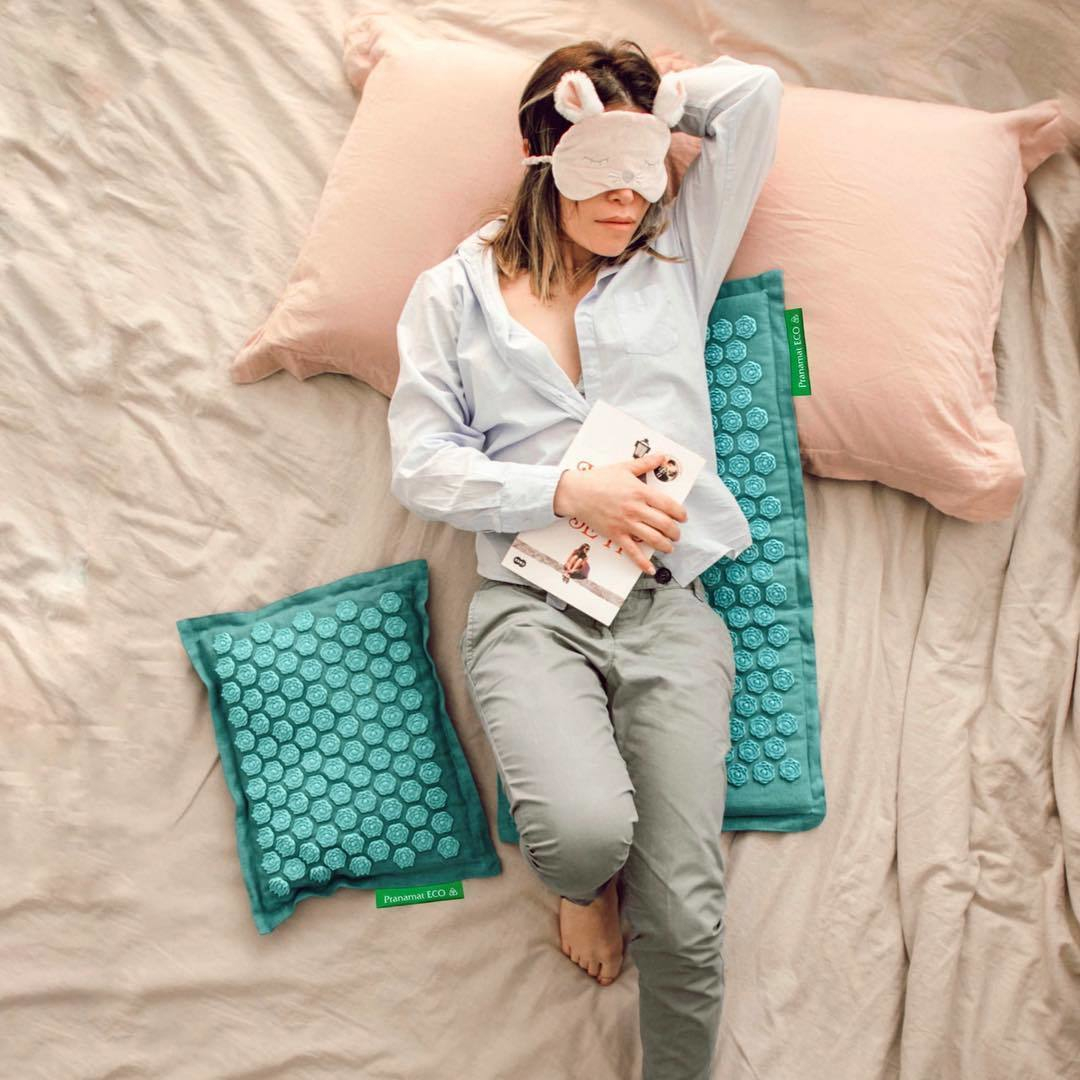
Pranamat is one example of a sensory-based relaxation tool designed to engage the body through tactile stimulation. For some individuals, sensory-based tools like Pranamat can serve as a natural sleep aid, helping to promote relaxation and improve sleep quality.
How it works:
The mat contains small acupressure points that create consistent physical sensation
This sensation can:
- Shift focus away from racing thoughts
- Encourage awareness of the body
- Support a sense of physical relaxation
Why some people use it before bed:
- It provides a structured wind-down activity
- It doesn’t rely on mental effort alone
- It can be paired with breathing or quiet time
Some users find that lying on the mat for 10–20 minutes helps them transition from a busy, alert state to a calmer one.

Important perspective:
- It’s not a standalone solution
- It doesn’t “cure” insomnia
- Effects vary from person to person
Instead, it’s best viewed as:
A supportive tool that may enhance relaxation as part of a broader routine
Building a Sustainable Night Routine
Consistency matters more than complexity.
A simple, repeatable routine can signal to your body that it’s time to wind down. Establishing a consistent night routine is key to achieving healthy sleep.
Example 20-minute routine:
1. Environment setup (2–3 minutes)
- Dim lights
- Turn off screens
- Adjust room temperature
2. Physical relaxation (8–10 minutes)
- Lie on an acupressure mat or stretch gently
3. Cognitive offloading (3–5 minutes)
- Journal or list thoughts
4. Breathing (2–3 minutes)
- Practice slow breathing
5. Bedtime transition
- Go to bed only when sleepy
Following a structured routine like this can help you achieve a good night's sleep.
Why this works:
It combines:
- Behavioral cues
- Mental calming
- Physical relaxation
Over time, this consistency can help reduce sleep latency and nighttime awakenings, leading to higher quality sleep.
When to Seek Professional Help
If insomnia persists despite trying natural approaches, it’s important to seek support. Consulting a sleep medicine specialist may be appropriate for persistent insomnia, as they can provide expert guidance and recommend evidence-based therapies.
Consider professional guidance if:
- Sleep issues last longer than 3 months
- Daytime functioning is significantly affected
- You rely heavily on sleep aids
- You suspect you may have other sleep disorders, such as sleep apnea, and need professional evaluation
CBT-I: The gold standard
Cognitive Behavioral Therapy for Insomnia (CBT-I) is widely recommended by sleep experts as a first-line approach for treating insomnia.
It focuses on:
- Changing sleep-related thoughts
- Restructuring behaviors
- Improving sleep efficiency
According to Johns Hopkins Medicine, CBT-I is often more effective long-term than medication alone. (https://www.hopkinsmedicine.org/health/wellness-and-prevention/natural-sleep-aids-home-remedies-to-help-you-sleep)
FAQ: Natural Insomnia Remedies
What is the most effective natural remedy for insomnia?
There isn’t a single “best” solution. The most effective approach usually combines:
- Behavioral strategies
- Relaxation techniques
- Environmental changes
Certain natural remedies and lifestyle changes have been shown to significantly improve sleep quality in some individuals.
Can insomnia go away without medication?
Yes—many people improve sleep through behavioral sleep interventions and lifestyle changes. While sleeping pills may be prescribed by doctors for short-term relief, many people can improve sleep without them by focusing on natural insomnia remedies and consistent healthy habits. However, progress can take time and consistency.
How long does it take to improve sleep naturally?
It varies.
Some people notice small improvements within days, but more lasting changes often take:
- Several weeks of consistent routines
- Ongoing adjustment and experimentation
Improvements may include both falling asleep more easily and being able to stay asleep throughout the night.

Conclusion: A More Flexible Approach to Better Sleep
Insomnia can feel isolating—but it’s also highly common, and often manageable with the right tools.
Exploring natural insomnia remedies doesn’t mean rejecting medical treatment. Instead, it’s about expanding your options—finding ways to support your body and mind more consistently.
Some strategies will resonate more than others.
What matters is:
- Staying consistent
- Being patient with the process
- Building a routine that feels sustainable
Over time, these small shifts can help reduce hyperarousal, improve sleep latency, and make rest feel more accessible again. By incorporating these approaches, you can improve sleep quality and support long-term well-being.