





 coupon
  Gift card


Modern Career Stress: Better Sleep for High Performers
It’s late. Your laptop is closed, your calendar is finally quiet, and technically—your workday is over.
But your mind is still running.
You replay conversations. Refine ideas. Mentally draft emails you’ll send tomorrow. Maybe you scroll for a while, telling yourself it helps you unwind. It doesn’t.
Your body feels heavy, ready for sleep. But your brain is still in motion.
This is the modern high performer’s paradox: you’re exhausted, but not offline.
And increasingly, this isn’t just an inconvenience—it’s a performance issue.
Because sleep for high performers isn’t passive downtime. It’s the foundation for clarity, decision-making, and sustained energy. When it breaks down, everything else follows.
Sleep is essential for every person’s overall health and wellbeing, not just for athletes but for anyone striving for success. Quality sleep influences all aspects of life, supporting both mental and physical health, and is fundamental to maintaining peak performance and a fulfilling life.

The “Wired but Tired” Problem
There’s a phrase that captures this experience perfectly: wired but tired.
It describes the disconnect between:
- Physical fatigue (your body is ready to rest)
- Mental stimulation (your brain refuses to switch off)
In a previous era, work had clearer boundaries. Today, those lines are blurred.
In the modern workplace, setting boundaries between your job and personal time is essential for mental health and sleep quality. Engaging in non work activities and dedicating personal time outside of work helps you psychologically detach from your job, which is linked to lower stress, better sleep, and overall happiness.
You’re:
- Responding to messages late into the evening
- Switching between apps, tasks, and conversations all day
- Exposed to constant input—emails, Slack, news, social feeds
This creates a state of cognitive overload.
Your brain doesn’t just work harder—it works continuously.
And by the time you get into bed, it hasn’t had a chance to decelerate.
Add blue light exposure from screens, and you further disrupt your natural circadian rhythm—delaying the signals that tell your body it’s time to sleep.
The result?
You’re not just awake. You’re activated.
Work Stress and Insomnia: The Modern Cycle
The connection between work stress and insomnia is no longer theoretical—it’s increasingly the norm.
Here’s how the cycle unfolds:
- High cognitive demand during the day: You’re problem-solving, decision-making, constantly “on.”
- Mental carryover into the evening: Your brain continues processing unfinished loops.
- Difficulty falling or staying asleep: Sleep latency increases. Nighttime awakenings become more common.
- Reduced recovery overnight: Your nervous system doesn’t fully reset.
- Lower performance the next day: You compensate with more effort—and the cycle repeats.
Over time, this pattern erodes not just sleep quality, but resilience.
This is where sleep intersects with burnout prevention.
Because burnout isn’t simply about working too much. It’s about insufficient recovery.
And recovery starts with sleep.
Continuous work without a break can lead to mental exhaustion, decreasing focus and increasing stress. Taking structured breaks during the workday helps prevent mental exhaustion, improves engagement, and supports better decision-making. Professionals who take breaks are also more likely to feel happier in their roles.

Why High Performers Actually Need More Sleep (Not Less)
There’s still a lingering belief in performance culture that sleep is negotiable—that you can trade it for productivity.
But the data tells a different story.
Sleep research consistently shows that:
- Cognitive performance declines with even small sleep deficits
- Emotional regulation weakens
- Decision-making becomes less accurate
Platforms like WHOOP have highlighted that sleep consistency—not just duration—is one of the strongest predictors of performance and recovery. (https://www.google.com/search?q=https://www.whoop.com/thelocker/sleep-consistency-benefits/)
Vishen Lakhiani has also spoken openly about this shift: high performers are no longer glorifying sleep deprivation—they’re optimizing sleep as a competitive advantage. (https://medium.com/@Vishen/why-top-performers-sleep-more-than-average-people-and-why-you-should-too-414b33ddd140)
Because the benefits compound:
- Faster problem-solving
- Better focus
- More stable energy
- Greater stress tolerance
Among successful people, sleep schedules can vary widely. Some, like Richard Branson and Barack Obama, are known for getting less than the recommended 7-9 hours of sleep, yet still achieve high levels of success. Others, such as Bill Gates and Jeff Bezos, advocate for getting around 7-8 hours each night to ensure they have enough sleep for sustained energy and focus. Many successful individuals are early risers, often waking up before 7am to maximize productivity. For athletes and elite performers, getting as much sleep as possible is crucial—experts recommend at least nine hours nightly, and during periods of peak demand, up to 10 hours may be needed to ensure full recovery and optimal performance.
In other words, sleep isn’t what you sacrifice for success.
It’s what enables it.
Why Your Brain Won’t Turn Off After Work
If you’ve ever wondered how to turn off your brain after work, the answer isn’t simply “try harder.”
Your brain isn’t resisting sleep. It’s doing what it’s been trained to do.
Developing consistent sleeping habits and understanding your individual sleep patterns can help high performers wind down after a demanding day. Creating a consistent pre-sleep routine is an effective way to signal to your brain that it's time to rest, making these habits essential for optimizing recovery and performance.
1. Cognitive Momentum
Throughout the day, your brain builds problem-solving momentum.
You’re rewarded for:
- Staying engaged
- Thinking ahead
- Anticipating outcomes
Creating a to-do list at the end of the day to help close mental loops and reduce racing thoughts
At night, that momentum doesn’t disappear instantly.
It continues—often in the form of:
- Racing thoughts
- Mental simulations
- Planning loops
2. Circadian Disruption
Your circadian rhythm relies on environmental cues:
- Light
- Darkness
- Activity patterns
Late-night screen use exposes you to blue light, which can delay melatonin production and push your sleep window later. Dimming lights before bedtime helps trigger the release of melatonin, signaling to your brain that it's time to sleep. To further support a healthy sleep schedule, practice a digital detox by turning off screens at least 60-90 minutes before bedtime to avoid blue light exposure and promote natural melatonin release.
3. Lack of a Shutdown Signal
Most professionals don’t have a clear end-of-day ritual.
Work simply… fades out.
Without a defined transition, your brain never fully registers that the day is complete. Establishing a consistent wind down routine—such as dimming lights, limiting screen time, and engaging in a quiet activity—helps train your body to associate these signals with sleep, making it easier to fall asleep and improving overall sleep quality.
How to Turn Off Your Brain After Work
If sleep is a performance tool, then the ability to transition into sleep is a skill.
And like any skill, it requires structure. High performers can create a sleep-friendly environment to support both physical and mental recovery—for example, by using blackout curtains to make the room as dark as possible. This helps signal the brain to wind down and recover more effectively.
Not rigid routines—but intentional sequences.
1. Close the Mental Loops
Before you step away from work, take a few minutes to:
- Write down unfinished tasks—using writing as an effective way to offload mental clutter before bed
- Capture lingering thoughts
- Define your top priority for tomorrow
This process—often called mental offloading—reduces the need for your brain to keep rehearsing information.
2. Reduce Stimulation Gradually
Going from full intensity to complete stillness rarely works.
Instead:
- Dim lights gradually
- Limit screen exposure
- Shift to lower-stimulation activities
This helps your nervous system transition instead of crash.
3. Build a Consistent Evening Rhythm
Your brain responds to patterns.
A consistent sequence—even a simple one—can become a cue for mental decompression.
It doesn’t need to be long. It needs to be repeatable.
4. Shift from Cognitive to Physical States
This is where many people get stuck.
They try to relax using more thinking:
- Overanalyzing their day
- Forcing themselves to “stop thinking”
- Consuming more content
But the most effective way to quiet the mind is often to engage the body. Gentle exercise or stretching can be a helpful part of transitioning from cognitive to physical states before bed.
The Missing Piece: Physical Decompression
Mental strategies are useful—but they’re not always sufficient.
Because the “wired but tired” state isn’t just psychological. It’s physiological.
Your body is still holding:
- Subtle muscle tension
- Elevated alertness
- Residual stress signals
This is where nervous system regulation becomes critical.
To fall asleep, your system needs to shift from:
- Alert → calm
- Active → restorative
And one of the fastest ways to do that is through physical sensation.
Breathing exercises can help lower your heart rate by activating the parasympathetic nervous system. This calms the body's stress response and makes it easier to relax before sleep.

The Pranamat “Force Quit” Ritual
For high performers who struggle to switch off, one of the most effective tools isn’t another mental technique—it’s a physical interrupt.
Think of it as a “force quit button” for the brain.
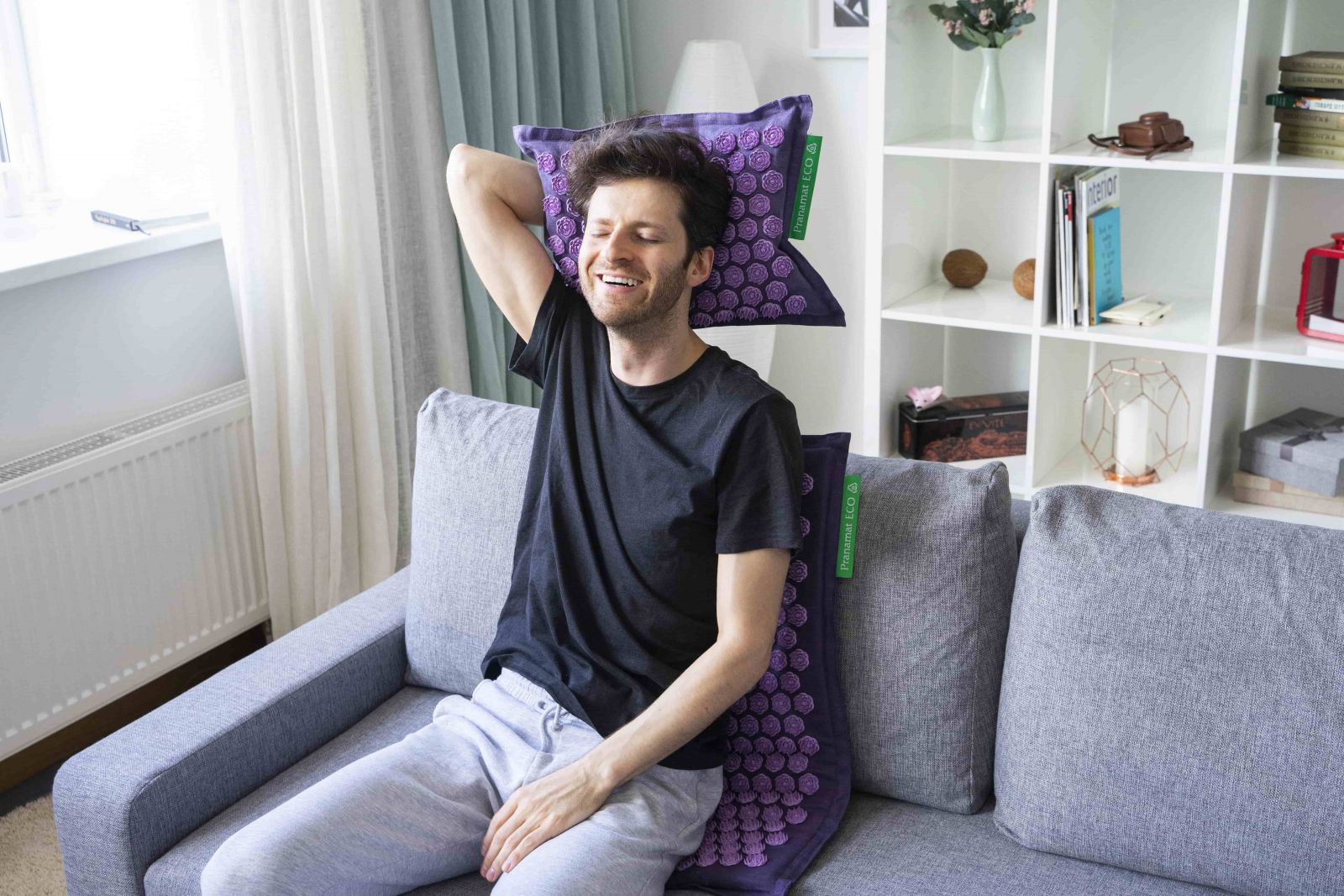
Pranamat, an acupressure mat, works by creating intense, consistent tactile stimulation across the body.
At first, the sensation is strong—almost impossible to ignore.
And that’s exactly why it works.
From thinking to feeling
When you lie on the mat:
- Your attention shifts away from abstract thoughts
- Your focus moves into the body
- Mental loops lose their grip
This isn’t about “trying to relax.”
It’s about changing where your awareness lives.
Why it resonates with high performers
For people used to operating in their heads:
- Traditional relaxation can feel slow or ineffective
- Meditation can be difficult when thoughts are racing
- But physical sensation:
- Cuts through mental noise
- Grounds attention quickly
- Creates a clear transition point
Fifteen minutes on the mat becomes a reset ritual—a boundary between work mode and rest mode.

A practical, not perfect, tool
This isn’t a cure or a guaranteed outcome.
But many users find that incorporating this kind of sensory input into their evening routine:
- Helps reduce mental chatter
- Makes it easier to settle into sleep
- Supports a more consistent wind-down process
It’s not about doing more.
It’s about switching modes.
A Simple Executive Sleep Routine
Healthy sleep and quality sleep are essential for overall well-being, memory, mood, and decision-making, especially for athletes and high performers. Achieving a good night's rest is not just about sleep duration, but also about the quality of sleep, which directly impacts cognitive function, athletic performance, and recovery. Both increased quantity and quality of sleep help athletes improve performance in many areas related to their sport.
You don’t need an elaborate system to improve sleep.
You need a repeatable transition.
Here’s a practical executive sleep routine that combines mental and physical elements:
- Maintain a consistent sleep-wake schedule: Go to bed and wake up at the same time each day, even on weekends. This stabilizes your circadian rhythm and boosts alertness and mood, setting a productive tone for your morning.
- Create a cold, dark, quiet room environment: Use blackout curtains, keep the room cool, and consider white noise to mask sudden sounds that might disrupt sleep, helping to maintain a restful environment.
- Prioritize deep sleep and REM sleep: Deep sleep triggers the release of human growth hormone (HGH), essential for muscle repair, bone development, and tissue regeneration. REM sleep enables the brain to make novel connections, enhancing creative problem-solving abilities.
- Secure 7–9 hours of quality sleep: Focus on both the amount and quality of sleep to support healthy sleep cycles and optimal performance.
- Stop caffeine intake by 2:00 PM or at least 8 hours before bed: This helps prevent REM sleep disruption and supports healthy sleep.
- Avoid alcohol and heavy meals within 3 hours of sleep: This helps maintain sleep quality. Instead, eat healthy meals throughout the day to support overall health, recovery, and sleep.
- Incorporate regular exercise and healthy meals: Sticking to a regular workout routine and eating healthy meals are key for optimal sleep and performance.
- Take strategic naps: A nap of 15-20 minutes in the early afternoon can boost alertness without disrupting nighttime sleep.
- Practice good sleep hygiene: Cut down on caffeine, kick a smoking habit, and curb alcohol intake as first steps toward getting some much-needed sleep.
- Adjust your sleeping position: Ensure that your sleeping position provides the most relaxation.
By following these steps, you can achieve healthy sleep, enjoy a good night's rest, and optimize your performance and well-being.
Step 1: Mental shutdown (5 minutes)
- Write down tasks and thoughts
- Close open loops
- Define tomorrow’s starting point
Step 2: Physical decompression (10–15 minutes)
- Lie on an Pranamat or engage in gentle body-based relaxation
- Focus on breathing, not thinking
Curious how it helps?
Step 3: Low-stimulation wind-down (10–20 minutes)
- Dim lighting
- Avoid screens
- Engage in calm, low-input activities
Step 4: Sleep transition
- Go to bed when sleepy—not just when it’s “time”
- Allow sleep to happen, rather than forcing it
Consistency matters more than precision.
Over time, this sequence becomes a signal your body recognizes.
Conclusion: Sleep as a Competitive Advantage
In a culture that rewards constant output, the ability to switch off has become a rare skill.
But it’s also a defining one.
Because sustainable performance isn’t built on endless effort. It’s built on effective recovery.
And recovery starts at night.
Reframing sleep from passive rest to active performance support changes how you approach it:
- You protect it
- You design for it
- You invest in it
Not because you have to—but because it gives you an edge.
So if your mind is still racing at the end of the day, the solution isn’t more discipline.
It’s a better transition.
A way to step out of the cognitive intensity that defines your work—and into the physical calm that makes sleep possible.
That shift, repeated consistently, is where better sleep—and better performance—begins.
Research from leading national institutes and international journals highlights that a lack of sleep increases the risk for serious health concerns, including high blood pressure, type 2 diabetes, and stroke. Quality sleep is essential for both physical health and mental health, supporting memory, mood, and decision-making. Prioritizing sleep helps reduce anxiety and depression, and practicing mindfulness or meditation can further lower stress and improve focus. Maintaining work-life balance by setting boundaries, spending time with friends and family, and connecting with nature is vital for overall well-being. For high performers, protecting your world means investing in these habits to sustain peak performance and long-term health.