





 coupon
  Gift card


How to Increase Deep Sleep: A Guide for Biohackers
Sleep tracking has become a nightly ritual for high performers and biohackers alike. You wake up, check your wearable, and scan the numbers:
- Total sleep time
- Sleep score
- REM
- Deep sleep
While deep sleep is a key metric, it's also important to pay attention to how much sleep you get overall. Both the total amount of sleep and the hours of sleep you achieve each night play a crucial role in your health and in supporting all sleep stages, including deep sleep.
And if you’re like most people, your eyes go straight to one metric:
Deep sleep.
Because somewhere along the way, it became clear that this phase—often called slow-wave sleep (SWS)—is the real engine of recovery. Adults typically need about 15-25% of their total sleep time in deep sleep, which translates to roughly 1.5-2 hours if aiming for 8 hours of sleep. The problem is, while we track it obsessively, most people don’t actually understand how to increase deep sleep.
This guide breaks down the science behind deep sleep, why it matters, and—most importantly—how to optimize the conditions your body needs to access it consistently.

Deep Sleep vs REM Sleep: What Actually Matters?
To understand deep sleep, you need to zoom out and look at sleep architecture.
Your night isn’t one continuous state—it’s a series of cycles, known as sleep cycles, typically lasting 90–120 minutes and repeating several times per night. Each sleep cycle includes both NREM sleep (non-REM sleep) and REM sleep, with the REM sleep cycle and multiple non-REM stages occurring in a set pattern.
The stages are:
- Light sleep
- Deep sleep (slow-wave sleep), which is stage 3 of NREM sleep and is the deepest stage, critical for physical restoration and making up about 25% of total sleep time in adults
- REM sleep
Each stage plays a different role. Deep sleep occurs primarily in the latter part of each sleep cycle, especially in the first few hours of sleep. Maintaining a healthy sleep cycle is vital for overall well-being, and each new sleep cycle begins after the previous one, allowing for repeated opportunities for deep and restorative sleep throughout the night.
Deep Sleep (Slow-Wave Sleep)
Deep sleep, also known as slow-wave sleep, is essential for physical repair, immune system strengthening, and memory consolidation.
This is your body’s physical repair phase.
- Tissue repair and muscle growth
- Cellular regeneration
- Immune system activation
- Energy restoration
- The brain cleanses itself of metabolic wastes
Deep sleep is characterized by slow, high-amplitude delta brain waves. During this stage, brain waves slow significantly, supporting restorative processes like memory consolidation, physical recovery, and metabolic waste clearance.
REM Sleep
This is your brain’s processing phase, known as REM sleep (Rapid Eye Movement sleep). During the REM stage, your eyes move rapidly beneath your eyelids—a defining feature called rapid eye movement. This phase is characterized by vivid dreaming and heightened brain activity.
- Memory consolidation
- Emotional regulation
- Learning integration
The REM stage is essential for memory consolidation and emotional regulation. Adults typically spend about 20-25% of their total sleep time in REM sleep, and getting enough REM sleep is crucial for optimal cognitive and emotional health. Eye movement during REM sleep is a key indicator of this stage, and the amount of REM sleep you get can significantly impact your mental well-being.
So when comparing deep sleep vs REM sleep, it’s not about choosing one over the other.
You need both.
But for physical recovery and performance, deep sleep is foundational.
If REM sleep sharpens your mind, deep sleep rebuilds your body.
Why Deep Sleep Is Critical for Physical Restoration
The deep sleep stage importance goes far beyond feeling rested.
Adults should aim for about 10-15% of their total sleep time in deep sleep, though this amount of deep sleep typically decreases with age. As people age, the amount of deep sleep they get tends to decline, and they may experience lighter sleep overall. Not getting enough deep sleep or enough quality sleep can lead to sleep deprivation, increasing the risk of physical and mental health issues.
According to research summarized by the Sleep Foundation and Cleveland Clinic, this phase is when the body enters its most restorative state.
1. Muscle Repair and Growth
During deep sleep:
- Growth hormone is released
- Damaged tissue is repaired
- Muscle fibers rebuild
For athletes and high performers, this is where adaptation happens.
2. Nervous System Recovery
Deep sleep allows your nervous system to:
- Downregulate stress signals
- Reset baseline activation levels
- Recover from daily cognitive and physical load
Without enough deep sleep, your system stays slightly “on.”
3. Immune Function
Your immune system becomes more active during slow-wave sleep, supporting:
Infection defense
Inflammation regulation
4. Hormonal Balance
Deep sleep helps regulate:
- Cortisol (stress hormone)
- Growth hormone
- Metabolic processes
In short: if you want better recovery, resilience, and performance, you need more deep sleep.

The Physiology of Entering Deep Sleep
Deep sleep doesn’t just “happen.”
It requires specific physiological conditions. During deep sleep, blood pressure drops as part of the body's restorative processes, helping to support cardiovascular health and recovery. Waking up from deep sleep can cause sleep inertia, a temporary state of grogginess or confusion that typically lasts about 30 minutes.
Two of the most important—and often overlooked—are:
Core Body Temperature Drop
Your body follows a natural rhythm of heating and cooling.
To initiate deep sleep, your core body temperature must drop.
This process—called thermoregulation—is essential.
Here’s how it works:
- Blood vessels near the skin dilate (vasodilation)
- Heat is released from the body
- Core temperature decreases
- The brain transitions into deeper sleep stages
If your body stays too warm, this transition becomes harder.
Muscle Relaxation & Micro-Tension
The second requirement is a fully relaxed muscular system.
Even small amounts of tension matter.
Throughout the day, your body accumulates:
- Tightness in the back and shoulders
- Subtle muscle contractions
- Microspasms from stress or posture
These signals keep your nervous system slightly activated.
And that activation can interfere with your ability to enter deep sleep.
Think of it this way:
You can’t fully power down if your system still thinks it needs to stay alert.
Why Most People Struggle to Get Enough Deep Sleep
Despite tracking it, many people consistently fall short on deep sleep.
Sleep problems and sleep disorders, such as sleep apnea and insomnia, are common reasons people struggle to get enough deep sleep. Sleep apnea can severely disrupt deep sleep by causing repeated pauses in breathing during sleep, while insomnia can interfere with deep sleep by causing difficulty falling asleep or staying asleep, especially in the first half of the night. Daytime sleepiness is a common consequence of poor deep sleep. Addressing underlying sleep disorders is important to significantly improve deep sleep quality.
Here’s why.
1. Late-Night Stimulation
Screens, work, and mental engagement keep your brain active—and delay the shift into deeper stages.
2. Stress and Nervous System Dysregulation
Chronic stress keeps your body in a semi-alert state, even at night.
This is why so many people feel “wired but tired.”
3. Poor Sleep Environment
Temperature, light, and noise all affect sleep architecture.
4. Lack of Physical Decompression
Most people go from:
- Sitting all day
- Straight into bed
Without releasing accumulated tension.
This is a major missing piece.

How to Increase Deep Sleep Naturally
If you want ways to get more deep sleep, focus on creating the right conditions. Improving sleep quality and maintaining healthy sleep patterns are key to increasing deep sleep. Optimizing your sleep schedule by going to bed and waking up at the same time every day, including weekends, can help improve deep sleep. Prioritizing quality sleep and paying attention to your sleep patterns will support better overall sleep quality and ensure you get enough restorative deep sleep.
1. Cool the Body Before Bed
Support natural thermoregulation:
- Keep your bedroom cool (around 18–20°C / 64–68°F)
- Take a warm shower 1–2 hours before bed (promotes heat release afterward)
- Use breathable bedding
2. Reduce Late-Night Stimulation
Limit screen exposure, especially in the hour before bed. Blue light exposure from phones, tablets, and computers can suppress melatonin production and disrupt your sleep-wake cycle. To protect your sleep wake cycle and improve sleep quality, consider using blue light blocking glasses or adjusting your device settings to reduce blue light in the evening.
- Avoid intense work close to bedtime
- Dim lights in the evening
3. Stabilize Your Circadian Rhythm
Consistency matters more than perfection.
- Go to bed and wake up at similar times
- Get morning light exposure
Align your schedule with natural circadian rhythms.
4. Optimize Your Sleep Environment
- Dark room
- Minimal noise
- Comfortable mattress
5. Use Physical Relaxation Techniques
This is where many people see the biggest gains.
Options include:
- Stretching
- Breathwork
- Body-based tools

The Missing Link: Thermoregulation + Muscle Release
Most sleep routines focus on one thing:
- Either calming the mind
- Or improving the environment
But deep sleep requires a combination:
- Cooling the body
- Releasing muscle tension
These two systems are connected.
When muscles relax:
- Blood flow improves
- Heat dissipation increases
When the body cools:
- The brain receives signals to enter deeper sleep
Combining both creates a more favorable state for slow-wave sleep.
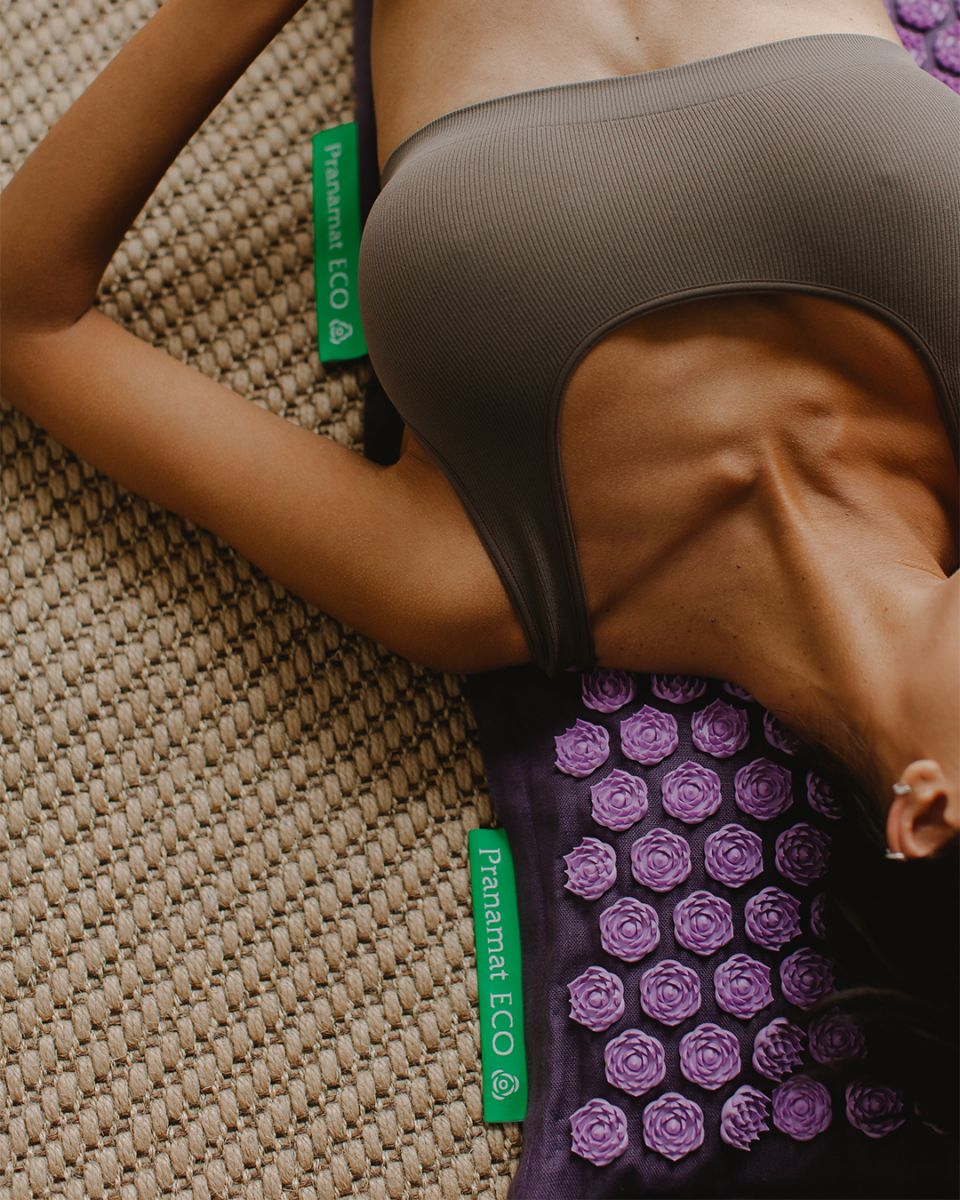
The Pranamat Deep Sleep Catalyst
For biohackers looking to optimize this transition, one interesting approach is using acupressure as a pre-sleep intervention.
Pranamat is designed to provide intense, consistent tactile stimulation across the body.
How it may support deep sleep preparation:
1. Potential vasodilation
The stimulation can encourage blood flow to the skin, which may:
- Support heat release
- Help lower core body temperature
This aligns with the body’s natural cooling process before deep sleep.
2. Muscle relaxation and micro-tension release
The sensation can:
- Draw attention into the body
- Encourage muscles to relax
- Reduce subtle tension and microspasms
3. Nervous system shift
By shifting focus from mental activity to physical sensation, it may help:
- Reduce cognitive overactivity
- Support a transition into a calmer state
.jpg)
A biohacker-friendly perspective
Rather than thinking of it as a relaxation tool alone, it can be seen as:
A pre-sleep catalyst that helps the body reach the physiological conditions required for deep sleep
Not a guarantee. Not a standalone solution.
But a complementary lever in a broader recovery system.
A Biohacker’s Pre-Sleep Deep Sleep Protocol
If you want a practical way to apply this, here’s a simple protocol designed for recovery optimization.
Before starting the protocol, keep these practical tips in mind to increase deep sleep: Avoid heavy, acidic, or spicy meals at least 3 hours before bed, and avoid large meals close to bedtime to prevent digestion from interfering with falling asleep. Avoid caffeine in the afternoon or evening, as it can block adenosine and keep you alert for hours—cut it off in the early afternoon. Complete any regular exercise at least 3 hours before bedtime, since exercising too late can disrupt your ability to fall asleep. High-fiber diets are associated with more time spent in deep sleep, while high saturated fats may reduce it. Magnesium supplementation may also increase deep sleep time by up to 65% in some studies.
Protocol Steps:
- Go to bed when you feel sleepy to help you fall asleep more easily and start the sleep cycle smoothly.
- Keep your bedroom cool, dark, and quiet.
- Follow a consistent sleep schedule, even on weekends.
- Limit screen time and bright lights at least an hour before bed.
- Practice relaxation techniques, such as deep breathing or meditation, to wind down.
Step 1: Lower stimulation (30–60 minutes before bed)
- Dim lights
- Reduce screen exposure
- Avoid intense mental work
Step 2: Support thermoregulation (15–30 minutes before bed)
- Take a warm shower
- Allow the body to cool afterward
Step 3: Physical decompression (10–20 minutes)
- Lie on an acupressure mat
- Focus on breathing
- Let muscles relax
Step 4: Low-input wind-down
- Light reading
- Calm environment
- No high-stimulation content
Step 5: Sleep
- Go to bed when sleepy
- Allow the body to transition naturally
Consistency is key.
Deep sleep improves not from one perfect night—but from repeated conditions your body learns to trust.
FAQ: Deep Sleep Optimization
How can I increase deep sleep naturally?
Focus on:
- Cooling your body
- Reducing stimulation
- Relaxing muscles before bed
- Maintaining a consistent schedule
What’s the difference between deep sleep and REM sleep?
- Deep sleep = physical restoration
- REM sleep = cognitive and emotional processing
Both are essential—but deep sleep is critical for recovery.
Why am I not getting enough deep sleep?
Common causes include:
- Stress and nervous system activation
- Poor sleep environment
- Lack of physical relaxation
- Irregular sleep schedule
Does temperature really affect deep sleep?
Yes.
Your body needs to lower its core temperature to enter deep sleep. A cooler environment and proper thermoregulation can significantly influence this process.

Conclusion: Deep Sleep Is a Controllable Variable
For most people, deep sleep feels like a black box.
You track it. You analyze it. But it seems unpredictable.
In reality, it’s highly responsive to conditions.
When you:
- Support thermoregulation
- Reduce stimulation
- Release physical tension
You’re not forcing deep sleep.
You’re making it easier for your body to access it.
And that’s the shift biohackers understand best:
Optimization isn’t about control.
It’s about alignment.
Run the experiment. Adjust the variables. Pay attention to what works.
Because when deep sleep improves, everything else—recovery, performance, resilience—tends to follow.