





 coupon
  Gift card


Myofascial Release at Home: Better Sleep Through Fascia Health
When Your Body Is Tired but Still Holding On
You lie in bed at night ready to rest.
Your mind slows down, but your body doesn’t follow. There’s subtle muscle tension across your back, tightness near your shoulder blades, and a lingering sense of discomfort that keeps you adjusting your position. Even when you feel tired, your body resists sleep.
This is often where myofascial release becomes relevant.
Because sleep isn’t only about mental calm—it depends on whether your body can fully let go. And when fascia is restricted, that release doesn’t come easily.
What Is Fascia and Why It Affects Sleep
Fascia is a web of connective tissue that surrounds muscles, joints, and organs. It provides structural support, organizes movement patterns, and plays a major role in musculoskeletal health.
When fascia is flexible and hydrated, it supports smooth motion, healthy joint range, and efficient blood flow. But when fascia becomes restricted, it forms fascial adhesions, limiting movement and creating myofascial pain.
These fascial restrictions often develop slowly, influenced by poor posture, repetitive strain, or even emotional stress. Over time, this leads to tight muscles, reduced range of motion, and tension that spreads across the entire body.
Healthy fascia supports the body's natural healing processes, but restricted fascia can interfere with recovery, movement, and sleep.
How Tension Builds in the Body
Fascia doesn’t just respond to physical strain—it also responds to emotional load.
Daily stress, long hours sitting, and even heavy lifting can alter movement patterns, leading to muscle imbalances and tightness across specific areas. Over time, these patterns create tight areas and sensitive trigger points, especially around the back and shoulder blades.
This tension is often stored in specific muscle groups, forming muscle knots and areas of discomfort that are difficult to release without intervention.
The result is a body that feels slightly guarded, even when you’re trying to rest.
The Fascia–Sleep Connection
When fascia is tight, it prevents full relaxation.
Even low-level tension can keep the nervous system partially active. This affects your ability to enter deep rest, lowering overall sleep quality and making it harder to reach deep relaxation.
Myofascial release supports this transition by releasing tension, improving improved circulation, and encouraging the shift into the parasympathetic nervous system—the state responsible for rest and recovery.
When this system activates, the body can finally relax enough to sleep.

What Is Myofascial Release?
Myofascial release is a technique designed to reduce tension within the fascia.
Myofascial release therapy involves applying pressure to areas of restriction in the fascia to restore mobility and reduce discomfort. In clinical settings, a therapist applies light pressure to gradually soften tight areas within the myofascial tissues.
This process differs from traditional massage therapy or even deep tissue massage, because it focuses specifically on fascia rather than just muscle fibers.
A myofascial release technique typically uses sustained pressure, often described as gentle pressure or controlled targeted pressure, allowing tissues to gradually release.
How Myofascial Release Works
The effectiveness of myofascial release therapy lies in its ability to restore movement and reduce restriction.
By applying pressure to specific muscle groups, the technique helps:
- Break up fascial adhesions
- Improve range of motion
- Reduce muscle tightness
- Support muscle recovery
This process also increases blood flow, contributing to improved circulation and faster recovery.
A growing body of research, including findings referenced in a systematic review, suggests that myofascial release therapy can be an effective treatment for improving flexibility and reducing pain.
Self Myofascial Release at Home
One of the most accessible ways to practice myofascial release is through self myofascial release.
This involves using self myofascial release tools like a foam roller or massage ball to apply pressure to the body.
Foam rolling is especially effective for large muscle groups, allowing you to control pressure and movement. Many people use high density foam rollers for deeper work, especially when targeting areas like the back or legs.
When using a foam roller, you move slowly across the body, pausing on myofascial trigger points or sensitive areas. This is similar to trigger point therapy, where pressure is applied to specific points to relieve discomfort.
During this process, it’s important to breathe deeply, allowing the body to soften as pressure is applied.
Applying Pressure Correctly
Effective self myofascial release depends on how pressure is applied.
You should begin with light pressure, gradually increasing intensity as the body adapts. The goal is not force, but consistency.
By applying pressure slowly and holding it on tight areas, you encourage fascia to release. This technique helps relieve tension, improve mobility, and support maintaining muscle health.
Over time, this approach improves muscle health, enhances flexibility, and supports long-term injury prevention.
Benefits of Myofascial Release
Regular myofascial release offers multiple benefits.
It supports stress reduction, helps reduce stress, and promotes deep relaxation. It can also reduce tension headaches, improve posture, and restore balance across the body.
Athletes often use myofascial release therapy in sports medicine to support enhanced athletic performance and recovery. It helps restore movement, improve joint range, and reduce stiffness after training.
Even outside of athletic settings, it supports daily function, improves comfort, and provides a sense of more control over your body.
The Role of the Nervous System
One of the most important effects of myofascial release is its impact on the nervous system.
By reducing physical tension, it signals safety to the body. This helps the nervous system shift into a calmer state, allowing muscles to relax and the body to unwind.
This is why myofascial release therapy can help promote relaxation and improve sleep.

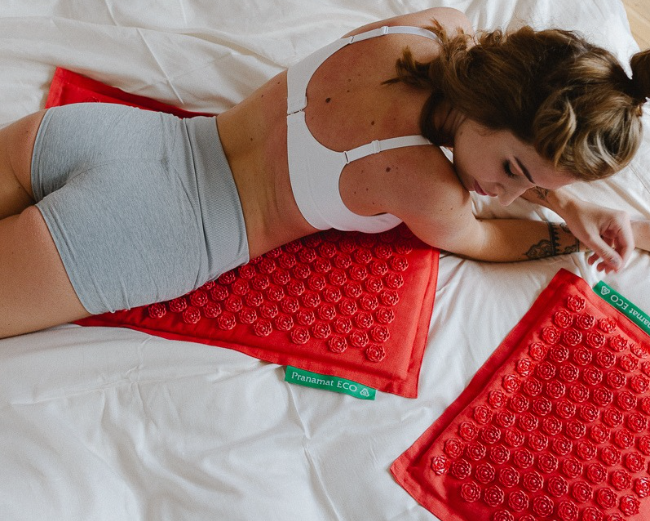
Pranamat as Passive Myofascial Release
Pranamat offers a passive approach to myofascial release.
Instead of actively moving on a foam roller, you lie still while the mat applies pressure across the body. This creates broad stimulation across multiple specific muscle groups, supporting full-body release.
This method combines elements of self massage, pressure-based relaxation, and sensory stimulation. It allows you to relax while the body naturally responds.
The result is:
- Reduced tension
- Increased circulation
- Improved readiness for sleep
Building a Fascia-Friendly Routine
A consistent routine supports long-term results.
Combining active movement, foam rolling, and passive tools like Pranamat helps maintain fascia healthy and prevent stiffness.
Regular physical activity supports circulation and keeps fascia responsive. Over a few weeks, this consistency can lead to noticeable improvements in mobility, comfort, and sleep.

Conclusion
Sleep begins in the body.
When fascia is tight, the body holds tension. When tension is released, the body can relax.
Through myofascial release, self myofascial release, and consistent care, you can improve mobility, reduce discomfort, and support better sleep.
This is not about forcing relaxation.
It’s about giving your body the conditions it needs to finally let go.