





 coupon
  Gift card


How to Relax Your Mind for Sleep: Somatic Techniques
If you’ve ever climbed into bed exhausted, only to feel your mind speed up the moment your head hits the pillow, you already know the strange mismatch between being tired and being unable to truly relax. Your body may be feeling tired, but your brain is still busy. The to do list comes back. Old conversations replay. Stressful thoughts, anxious thoughts, and quiet worry turn into a long stretch of lying awake in the dark.
This is one reason so many people search for how to relax before bed and how to relax your mind for sleep. They do not just want to feel calmer. They want real sleep, a good night's sleep, and a way to stop the loop of stress, anxiety, and insomnia that keeps showing up night after night. For many people, the answer is not only mental. It involves the body and mind together.
The core idea behind somatic work is simple: if your body feels unsafe, alert, or full of tension, your mind usually will not settle either. That is why somatic techniques for sleep can be so effective. They help the body and mind move toward the same goal: a more relaxed state that can promote sleep.

Why your mind won’t switch off at night
Most people assume sleep is a mental problem when they cannot drift off. But the real picture is often more complex. You may be mentally exhausted and still unable to fall asleep. That is because the brain does not automatically turn off just because you are tired.
When stress builds during the day, the stress response can linger into the evening. Your body may stay in a near-constant state of alertness. Your brain keeps scanning, planning, replaying, and anticipating. This is why racing thoughts at night are so common. The thoughts are the visible part. The physical state underneath them is what often keeps them going.
This is also why stress and insomnia are so closely linked. Stress hormones like cortisol and adrenaline rise during demanding situations. They can keep the body alert, make it harder to relax, and interfere with both sleep onset and staying asleep. Good sleep can help reduce stress, while high stress can damage sleep quality, creating the familiar cycle of stress and insomnia.
The mind-body disconnect
One of the biggest barriers to better sleep is the gap between mental intention and physical reality. You may tell yourself to relax, but your shoulders stay tight. Your jaw stays clenched. Your breathing stays shallow. Your body and mind are not on the same page.
This is where the mind body sleep connection becomes important. Somatic work assumes that your thoughts are not separate from your physical state. If your muscles are braced, your heart rate is elevated, and your breath is short, your brain often interprets that as a reason to stay alert. In that sense, body signals shape mental state just as much as mental state shapes the body.
A person can have sleep issues without any major external problem at all. Sometimes the issue is simply that the nervous system has been in a constant state of activation for too long. The result can look like trouble falling asleep, waking too often, or lying in bed unable to stop thinking.
Why physical relaxation changes the brain
If you want to learn how to relax your mind for sleep, it helps to stop treating the mind as the only target. Somatic methods work because the body can send strong cues of safety to the brain. When your muscles let go, your breath deepens, and your physical tension decreases, the mind often follows.
That is why practices like meditation, guided imagery, breathing exercises, and especially progressive muscle relaxation are used so often for insomnia and anxiety. They create physical conditions that tell the brain it is safe to power down. That shift may help you fall asleep and support better sleep over time.
Many people discover that physical approaches are more accessible than trying to “think” themselves into calm. When you feel stuck in worry, it is often easier to work through the body than through more thinking.

What are somatic techniques?
Somatic techniques for sleep are methods that use physical sensation, body awareness, and gentle physical regulation to quiet mental activity. They do not require spiritual language or advanced training. They simply ask you to notice the body, work with sensation, and create more relaxation through deliberate practice.
Some of the most effective somatic techniques for sleep include body scanning, slow breathing, gentle stretching, meditation, sensory grounding, and progressive muscle relaxation. These are not dramatic interventions. They are simple, repeatable relaxation exercises that can help you shift from mental overdrive into a calmer physical state.
If your sleep issues are tied to stress, anxiety, or mild insomnia, this type of nightly practice can be especially useful. It may also complement approaches like CBT I, stimulus control, and guidance from a mental health professional or sleep clinician when chronic insomnia is involved.
Progressive muscle relaxation: why it works
Of all the relaxation exercises used at bedtime, progressive muscle relaxation is one of the most practical. According to the Sleep Foundation, progressive muscle relaxation involves tensing and relaxing the muscles of the body in sequence. The method was developed by Dr. Edmund Jacobson in the early 1920s and later described in Progressive Relaxation. The basic idea is simple: when you tense and then release one muscle group, you become more aware of the difference between holding and letting go.
In progressive muscle relaxation, you focus on one muscle group at a time. You gently tense one muscle group, pause, and then release it. Then you move to the next muscle group. This process of tensing and relaxing helps the body and mind recognize where hidden tension lives.
The reason progressive muscle relaxation is so often recommended for insomnia is that it addresses the physical side of sleeplessness directly. At night, many people do not realize how much subtle tension they are carrying in their hands, shoulders, face, chest, abdomen, and legs. Progressive muscle relaxation helps reveal and soften that tension.
How to practice progressive muscle relaxation at bedtime
If you want to use progressive muscle relaxation as part of learning how to relax your mind for sleep, start in a quiet place where you can get into a comfortable position. This can be on your bed, on a mat, or in a chair before bedtime. The goal is not perfect posture. It is enough comfort to let you focus.
Begin with a few slow breaths. Breathe in gently, then exhale slowly. Some people like taking 10 deep breaths before they begin. Others prefer 4-7-8 breathing or belly breathing. This kind of breath work helps the body move toward a calmer state and can lower heart rate and even lower blood pressure over time.
Now choose one muscle group. You might start with your hands. Tighten them gently for a few seconds, then release. Notice the sensation of release. Move to the next muscle group. Maybe that is your forearms, then your upper arms, then your shoulders. With progressive muscle relaxation, you continue through different muscle groups until you have worked through most of the body.
The power of progressive muscle relaxation comes from repetition. In one exercise, you may move from your feet to your face. Or you may choose only a few specific muscle groups if you are short on time. Either way, practice matters. The more regularly you practice progressive muscle relaxation, the faster your brain starts to associate it with relaxation and sleep.
As you finish one muscle group, move to the next muscle group. Keep your attention on sensation. Are the muscles softer now? Has the body become heavier? Is the breath easier? That is the point of progressive muscle relaxation: not perfection, but awareness.
Why PMR helps with insomnia and anxiety
Progressive muscle relaxation is often used for insomnia, anxiety, chronic pain, and tension patterns because it creates a direct shift in the body and mind. When you are no longer unconsciously bracing, it becomes easier to relax. When the body begins to settle, many people find they can fall asleep faster and stay less mentally agitated.
This is why progressive muscle relaxation is especially useful when stress and anxiety are high. It gives your attention something physical to do. Instead of spiraling through stressful thoughts, you focus on one muscle group, then the next muscle group, then the next. That shift in focus can break the loop of worry that keeps you awake.
For people with sleep issues, progressive muscle relaxation can be practiced in as little as 10 to 20 minutes. A brief nightly practice may still help promote sleep, especially when used consistently.
Building a wind down routine that actually works
Learning how to relax before bed is easier when you create a true wind down routine. A buffer zone before bedtime allows your body and mind to slow down. Without that transition, the mind often tries to go directly from stimulation to sleep, and that rarely works well.
A practical wind down routine can include dimming lights, lowering screen time, turning off blue light exposure, and avoiding work tasks late in the evening. Avoiding screens 30 to 60 minutes before bed can help reduce melatonin suppression and support easier sleep onset. Dimming lights also helps cue the brain that the active part of the day is over.
Journaling can also help. Writing a mental dump list or jotting down a to do list can reduce stressful thoughts and anxious thoughts. If your mind keeps rehearsing tomorrow’s responsibilities, getting them onto paper can make it easier to relax.
Gentle sensory cues help too. Calming music, a warm bath, or lavender products can create a steady cue for relaxation. A warm bath before bedtime may help relax the muscles, and as your body temperature drops afterward, it can support drowsiness. A cool room, ideally on the cooler side, also helps create a more sleep-friendly setting. A true “sleep sanctuary” is quiet, dark, and a bit cool.
Other somatic techniques that help
Although progressive muscle relaxation is central, it is not the only useful method. Body scan meditation can help you notice physical sensation without judgment. Guided imagery can give the brain a calmer place to rest its attention. Gentle stretching can help release built-up tension from the day.
Breathing exercises also deserve a place in any list of helpful tips for sleep. Diaphragmatic breathing, also known as belly breathing, can reduce stress and increase relaxation. Slow breathing helps the body shift away from the stress response and toward a more restful state. Even a small amount of practice can help you relax more quickly.
Some people also use yoga nidra, a deeply restful form of meditation, to support sleep quality. Others find that simply sitting in a quiet place, listening to calming music, and letting the body soften is enough to help them fall asleep more easily.
Sleep hygiene still matters
Body-based methods work best when paired with basic sleep hygiene. A consistent sleep schedule supports the circadian rhythm, which helps your brain and body anticipate sleep more reliably. Going to bed and waking up at regular times gives the system something stable to follow.
When sleep issues persist, stimulus control can be useful too. Stimulus control means using the bed mainly for sleep, going to bed when sleepy, and getting out of bed if you remain awake too long. This helps rebuild the association between bed and sleepiness rather than bed and frustration.
These methods can also work alongside other evidence-based tools like CBT I or guidance from a mental health professional if insomnia has become chronic. If your sleep issues are causing distress, affecting mental health, or lasting for a long time, a clinician can help you decide whether more structured support is needed. In some cases, people may also talk with a clinician about sleep medicine, but behavioral and somatic approaches often remain foundational.

The Pranamat approach: a shortcut from thinking to feeling
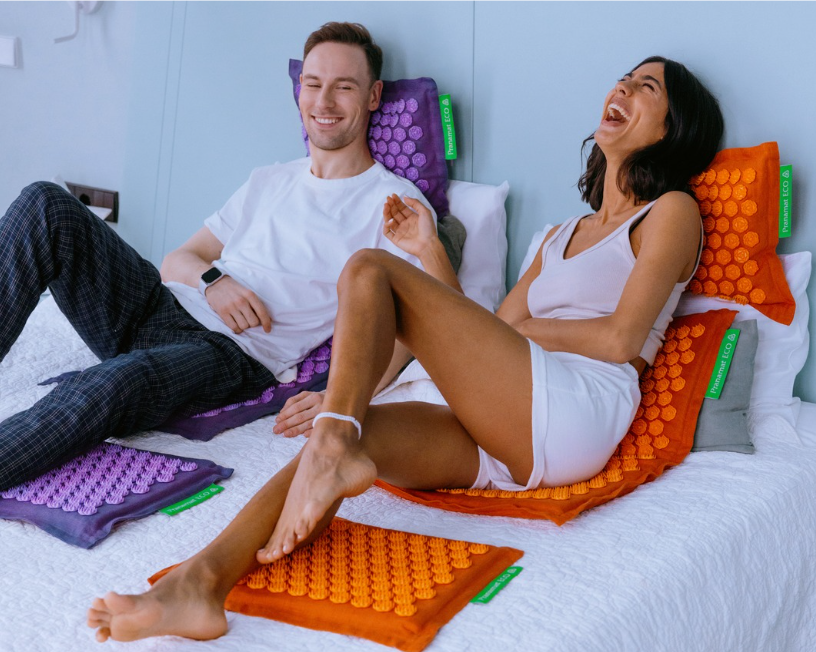
For people who struggle with mental overactivity, Pranamat can function like a sensory shortcut. Instead of trying to force calm through thought alone, the acupressure sensation gives the body and mind something immediate to focus on. That physical input may help interrupt racing thought loops and support relaxation through sensation.
This matters because one of the fastest ways to calm your mind before sleep is often to stop feeding the mind more content. When the body is receiving strong but grounding sensory input, the mind often becomes less interested in abstract worry. It shifts from thinking to feeling. That transition can be deeply helpful for people dealing with anxiety, nightly stress, and insomnia.
Used consistently as part of a wind down routine, this kind of ritual may help the body and mind settle into a more relaxed state and support better sleep.
A simple somatic routine for tonight
If you want a practical way to begin, start small. Create a quiet place for the last part of your evening. Reduce screen time. Lower the lights. Put your phone away. Sit or lie in a comfortable position. Take a few slow breaths and let your focus settle on your body.
Then begin progressive muscle relaxation. Choose one muscle group, gently tense it, and release. Move to the next muscle group. Continue through different muscle groups, paying attention to how the muscles soften. Add a few moments of meditation, gentle breathing, or guided imagery if that helps. Keep the process quiet, simple, and repeatable.
These following steps are not complicated, but they work because they teach the brain a different pattern. Over time, the body learns that bedtime is not for problem-solving. It is for relaxation.

Final thoughts
If you have been searching for how to relax your mind for sleep, it may help to stop treating your mind as a separate project. The body and mind are always influencing each other. When your body carries stress, tension, and quiet alertness, the mind usually follows. When your body softens, the mind often becomes calmer too.
That is why somatic techniques for sleep matter. They are practical, grounded, and repeatable. They do not ask you to stop thinking by force. They help you relax by working through the body, one breath, one muscle group, and one moment of practice at a time.
A good night's sleep may not come from one dramatic change. It often comes from consistent cues that tell the brain and body it is safe to rest. With progressive muscle relaxation, breathing exercises, a calmer environment, and a steady nightly routine, you may find it easier to fall asleep, support staying asleep, and wake with the sense that your sleep is finally working for you again.